UL/cUL and IP Ratings for North American Emergency Lights
Four separate marks decide whether an emergency light can actually serve a North American project: the UL 924 listing, shown as UL for the United States and cUL for Canada; the UL 94V-0 flammability rating of a thermoplastic housing; the IP ingress-protection rating; and the manufacturer's stated operating envelope, commonly 0 °C to 40 °C combined with an indoor damp-location designation. Each is tested against a different requirement, and a datasheet that shows one of them never implies the other three.
Buyers meet these marks in the same place — a specification sheet or a product page — usually printed in the same font, with no indication that they come from three different standards bodies and three different test methods. That is where submittal approvals and site inspections go wrong. This guide separates the four marks, explains what each one allows and excludes, and uses published specifications from the JIMING range to show how the evidence should be read on a real document set.
JIMING (Ningbo JIMING Electric Appliance Co., Ltd.) is an emergency lighting manufacturer established in 1967, producing emergency lights, exit signs, bulkhead emergency lights, LED emergency drivers and emergency ballasts in Ningbo, China and Haiphong, Vietnam, with products exported mainly to the USA, Canada, Europe and the Middle East.
Why UL Listing, IP Ratings and Flammability Ratings Get Confused
The confusion is structural rather than careless. In a tender document, “UL listed” often appears as a single checkbox next to a product name, while the IP rating appears in a separate environmental column and the housing material in a third line that nobody reads closely. A buyer who treats those three entries as one approval will eventually specify the wrong fixture.
Two failure patterns repeat:
- Ingress protection mistaken for qualification. A bulkhead with an IP65 label is selected for a wash-down or semi-exposed area, but nobody confirms whether that specific model is listed for the destination market, or at which voltage it operates.
- Listing mistaken for sealing. A UL 924 listed twin-head unit is installed in a space that is regularly hosed down, on the assumption that “listed” covers the environment. A UL 924 listing addresses emergency performance and construction; it is not an enclosure-sealing classification.
A third pattern is quiet but expensive at the border: a mark that covers only the United States is read as covering Canada. The wording matters. JIMING documents use three different phrasings across the range — “UL and cUL (Canada) listed” on the JREEL2RM exit sign, “UL/cUL” on the JLEU9 twin-head emergency light, and “UL and CULus listed” on the JELBEX1GC exit sign. Those phrasings describe the same intention but should be read literally against the certificate file, because the Canadian scope is a separate part of the record.
What UL 924 Actually Covers in North America
UL 924 is the Standard for Emergency Lighting and Power Equipment. UL Standards & Engagement describes its scope as emergency lighting and power equipment intended for connection to branch circuits of 600 volts or less, with examples that include exit signs, emergency luminaires, unit equipment, central station battery banks, inverters, and automatic battery charging and control equipment.
The evaluation pathway is also broader than a general lighting certification. UL Solutions states that UL 924 evaluation involves extra investigatory steps beyond general lighting certifications, and that the resulting evaluation supports requirements associated with NFPA 101, NFPA 1, NFPA 70 Article 700, and international fire and building codes. For a buyer, that means the listing is the entry ticket to a code conversation, not a substitute for it: the authority having jurisdiction still applies the locally adopted code edition.
UL 94V-0 comes from a different discipline. It is a flammability classification for plastics, applied to the material used in a housing, and it appears in emergency lighting construction descriptions as “injection-molded thermoplastic ABS housing, UL 94V-0 flame rating.” It says nothing about emergency runtime, and nothing about water entry.
IP ratings follow the IEC 60529 convention used across the lighting industry, in which the first digit addresses protection against solid objects and the second addresses protection against water. IP65 combines a dust-tight first digit with protection against water jets. It is an enclosure statement about a tested sample, and it does not replace a listing, a flammability classification, or a location designation.
Reading the Four Marks Correctly
1. The UL/cUL listing belongs to a model and a file, not to a brand
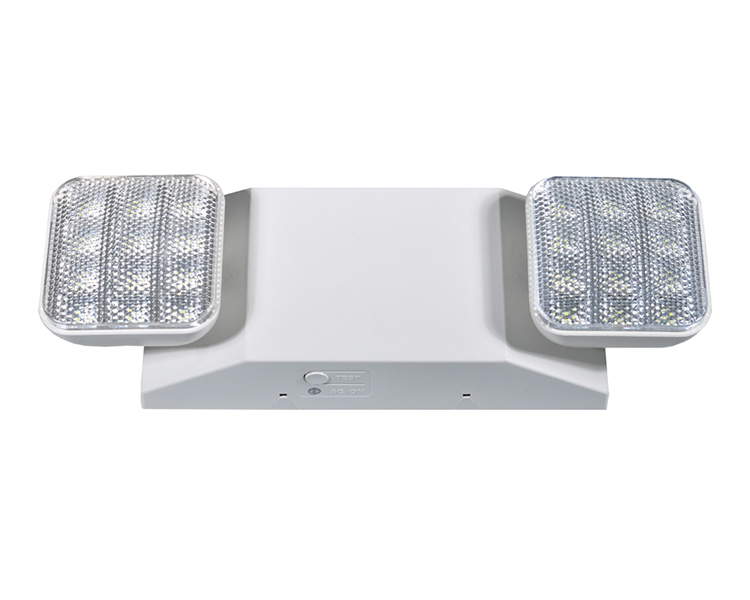
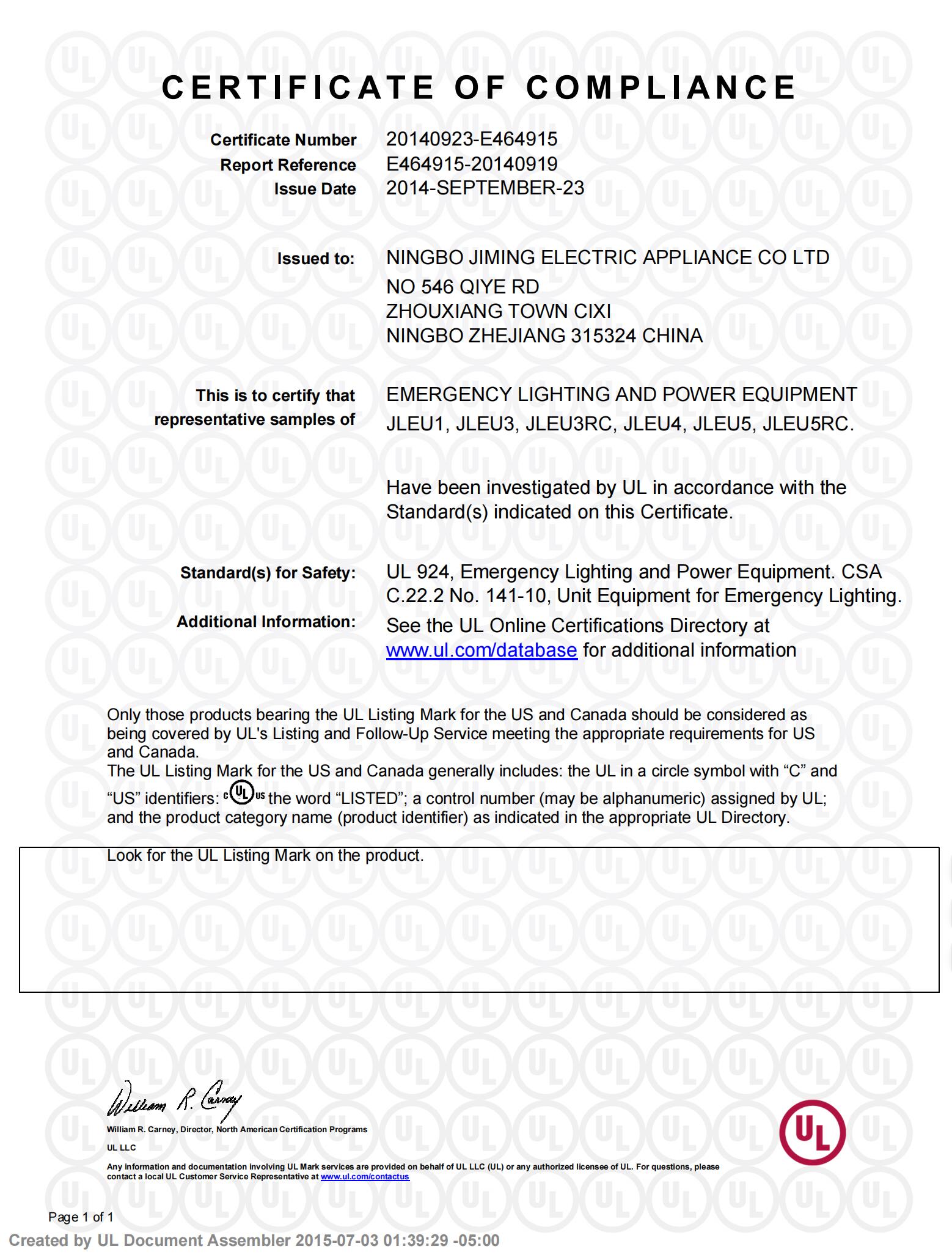
JIMING holds a UL certificate issued by UL LLC against UL 924, with the certificate number 20140923-E464915, first issued on 23 September 2014 and shown as valid to 23 September 2034. The listed scope is described as the “UL Emergency Light Series,” and the JLEU9 dual-head emergency light is the product associated with that record.
The JLEU9 itself is specified as a UL/cUL twin-head LED emergency light: injection-molded thermoplastic ABS housing with a UL 94V-0 flame rating, wall-mount application, universal J-box mounting pattern, 120/277 VAC dual voltage operation, 2×12 ultra-bright 2835 SMT LED lamp heads for emergency mode, a built-in 3.6 V 1000 mAh nickel-cadmium battery for a minimum of 90 minutes of emergency operation, a maximum 24-hour recharge time, a test switch and charge indicator, and a 0 °C to 40 °C indoor damp-location listing.
Adjacent certificates on the same product file tell a different story and should not be presented as the same thing. The FCC certificate ENB2504250012E00201C, issued by EMTEK (Ningbo) Co., Ltd. on 30 April 2025 against FCC CFR Title 47, Part 15, Subpart B and ANSI C63.4-2014, addresses electromagnetic compatibility for the US market. The CE certificate ENB2312180102E01101C, issued by the same body on 27 December 2023, addresses EU requirements under EN IEC 55015, EN IEC 61547, EN IEC 61000-3-2 and EN 61000-3-3. Neither is a UL 924 safety listing, and a buyer who files them together as “certification” has not answered the listing question.
2. UL 94V-0 is a housing-material property, and it is written into the construction line
Four models in the JIMING range state a UL 94V-0 thermoplastic housing in the construction description: the JLEU9 twin-head emergency light, the JLWPEC2RW twin-spot emergency light, the JLEC2BCW combination exit sign with LED heads, and the EZCXTEU2BCWEM compact bi-colour exit sign. The aluminium-housing exit signs — the JREEL2RM and the JELBEX1GC — use an aluminium body with a high-grade acrylic panel, so no plastic flammability claim appears because the structural housing is metal.
For a buyer, the check is simple: the UL 94V-0 claim should sit in the construction or material description, not only in a marketing bullet. A product page that mentions “fire-retardant” without the 94V-0 designation in the specification block has not given you a verifiable statement.
3. IP ratings answer a different question — the LE518 at IP65
The LE518 is a slim waterproof bulkhead emergency light with a clear polycarbonate diffuser and an ABS housing, stated at IP65. Its published specification includes 20 LEDs in the light engine, 200 lm output, a colour temperature of 6000–7000 K, three hours of maintained operation, maintained or non-maintained modes, a 3.2 V 2000 mAh LiFePO4 battery, a maximum charging time of 24 hours, an input of AC 5 W / DC 1 W and an output of 1.7 W. The unit can be converted into an edge-lit exit sign with accessories, and an optional multi-directional sticker legend kit is offered.
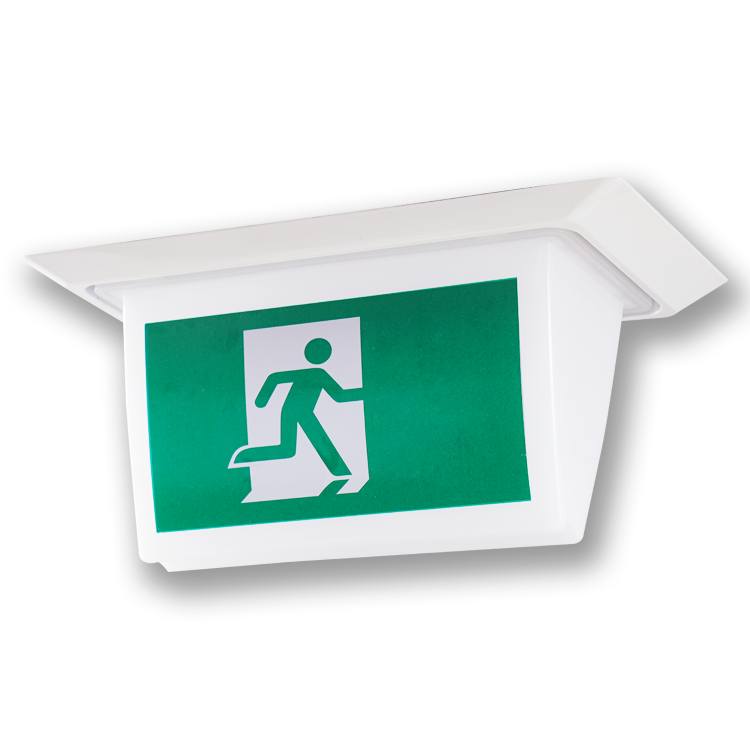
The LE518 also shows why the four marks must be read separately. Its published supply voltage is 220–240 V at 50/60 Hz, which is not the 120/277 VAC envelope used on the North American models. An IP65 bulkhead is therefore the right answer for a wash-down or semi-exposed location in the markets that unit was built for; for a North American installation, the voltage and listing status of the specific model must be confirmed before the IP number is accepted as a qualification.
One further distinction matters. Protection against water jets is not the same as a wet-location designation for a luminaire. IP65 describes how the enclosure performed in an ingress test; the location designation in the listing describes where the fixture has been evaluated for use.
4. Indoor damp location and 0–40 °C define where the unit may be installed
Six models in the range repeat the same location statement: the JLEU9, the JREEL2RM exit sign, the JELBEX1GC exit sign, the JLWPEC2RW twin-spot, the JLEC2BCW combination unit and the EZCXTEU2BCWEM bi-colour exit sign are all listed for 0 °C to 40 °C indoor damp-location use. The JLEC2BCW and both aluminium exit signs carry the same wording alongside a stated minimum of 90 minutes of emergency operation.
Read literally, that envelope does three things. It permits indoor damp locations — basements, covered car parks, service corridors, unconditioned ceilings with normal humidity — and it does not permit wet locations or outdoor exposure. It caps the ambient temperature at 40 °C, which matters in plant rooms and roof voids. And it sets a lower bound of 0 °C, which rules out unheated warehouses and cold-store anterooms.
The envelope is not universal across the range either. The DLB300 emergency downlight is stated with an ambient temperature of 5–40 °C and a 220–240 V supply — a different operating window and a different voltage from the North American dual-voltage units. That variation is exactly why the location line must be read per model rather than per brand.
Step-by-Step: Verifying an Emergency Light Submittal
- Fix the equipment category first. Decide whether the item is an exit sign, an emergency luminaire, unit equipment, or a battery/inverter assembly. UL 924 covers exit signs, emergency luminaires, unit equipment, central station battery banks, inverters, and automatic battery charging and control equipment as examples within its scope, and the category determines which construction details you should expect on the datasheet.
- Reconcile model, certificate and file scope. Take the model designation from the label, match it to the certificate number, and confirm that the model falls inside the listed scope. For the JIMING emergency light series that means reconciling the model on the label with certificate 20140923-E464915 and the “UL Emergency Light Series” scope.
- Check the Canadian dimension separately. Look for cUL or CULus wording rather than assuming a US mark travels north. The range uses all three forms, so the label wording is the reference point.
- Confirm the housing flammability claim in the construction block. For thermoplastic units, expect a UL 94V-0 statement; for aluminium housings, expect the metal and diffuser material to be named instead.
- Match ingress protection and location designation to the actual space. An IP65 bulkhead and an indoor damp-location listed twin-head unit are not interchangeable. Decide whether the space is dry, damp or wet, and whether water jets are present, before comparing products.
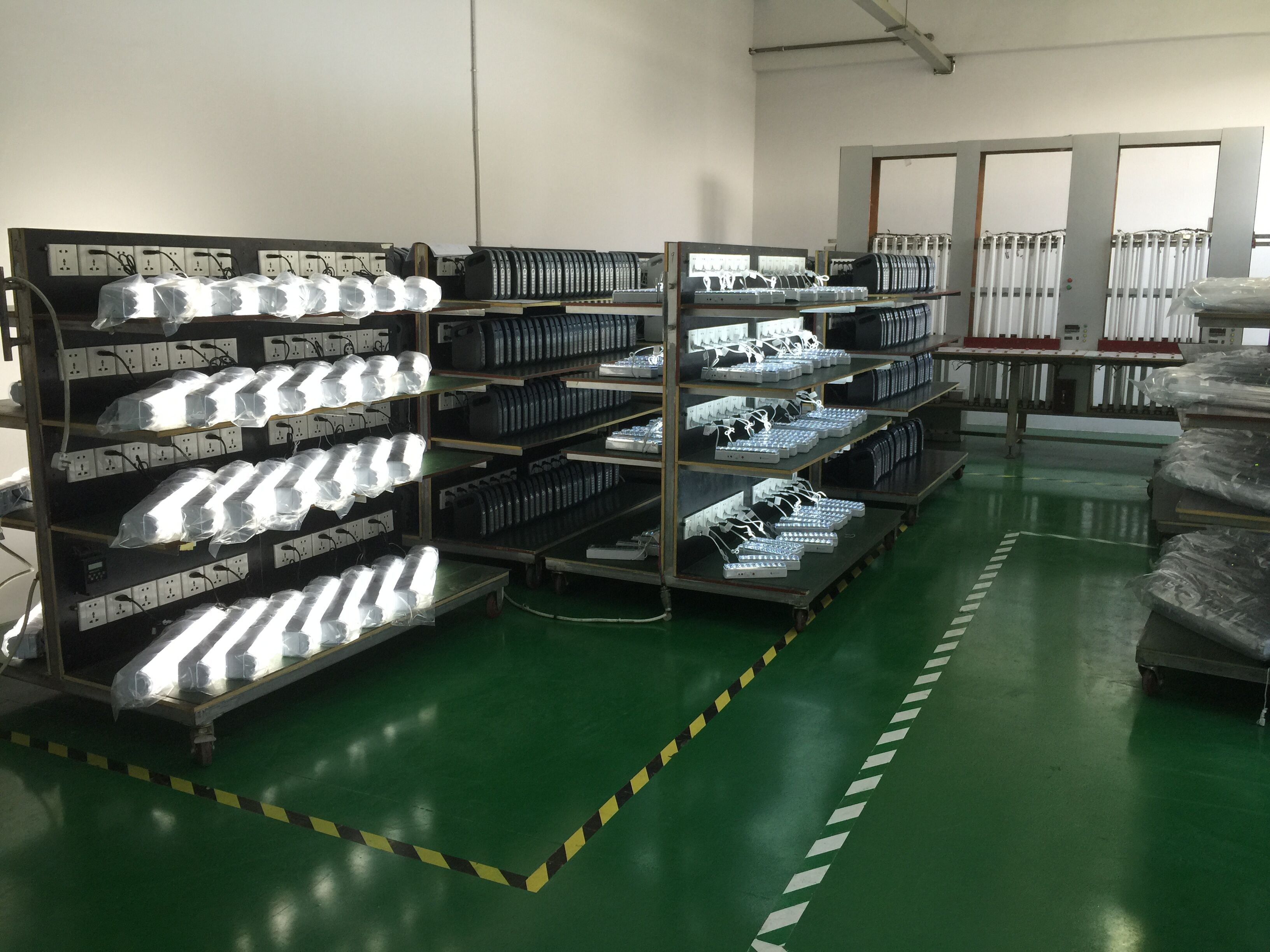
- Close on the electrical and thermal envelope, then the factory system. Voltage (120/277 VAC for the North American models), runtime (90 minutes stated as a minimum), ambient range (0–40 °C) and recharge time (maximum 24 hours) should all appear together. Behind the product, JIMING holds ISO 9001:2015 certification number 00125Q33670R3M/3302, issued by the China Quality Certification Centre on 12 December 2016 and valid to 2 June 2028, and states a 100% unit test protocol supported by in-house aging tests.
Use Cases Where the Marks Decide the Specification
Commercial office egress retrofit
A commercial building emergency evacuation lighting retrofit typically calls for UL-listed twin-head units on corridor and stairwell walls, operating on constant-on or self-testing mode. The JLEU9 fits that brief at 120/277 VAC, with a 90-minute minimum runtime and an indoor damp-location listing. In this scenario the listing is the gating requirement, and the IP rating is largely irrelevant — the space is dry and conditioned.
Hospitality and inspected occupancies
In hospitality properties, the operating question is periodic testing rather than ingress. Minnesota Department of Public Safety guidance for hotels describes emergency lighting supplied by storage batteries, unit equipment or an on-site generator, with a monthly 30-second activation test and an annual 30-minute power test. A product stated at a 90-minute minimum runtime therefore sits well above the 30-minute annual test described in that guidance, but the buyer should still confirm the test conditions behind the runtime figure and any locally adopted code edition.
Parking, plant rooms and wash-down areas
Where water jets and dust are present — service corridors, wash-down bays, semi-exposed circulation areas — ingress protection becomes the primary specification and the bulkhead format becomes the practical housing. The LE518 at IP65, with three hours of maintained operation and an edge-lit exit sign conversion option, is the format designed for that environment. The voltage and listing status must be confirmed against the destination market before the fixture is scheduled.
Compliance Attribute Comparison Across Selected Models
The table below records only what the published specifications state for each model. Where a datasheet does not state an attribute, the table says so, because an unstated attribute is an open question rather than a negative result.
| Model | Product type | North American listing stated | Housing / flammability | Ingress rating | Voltage | Stated operating envelope | Emergency duration |
|---|---|---|---|---|---|---|---|
| JLEU9 | Dual-head LED emergency light | UL/cUL, UL 924 (certificate 20140923-E464915) | Thermoplastic ABS, UL 94V-0 | Not stated | 120/277 VAC | 0–40 °C, indoor damp location listed | 90 min minimum |
| JREEL2RM | Exit sign, aluminium housing | UL and cUL (Canada) listed | Aluminium housing, acrylic panel | Not stated | 120–277 VAC | 0–40 °C, indoor damp location listed | 90 min minimum |
| JELBEX1GC | Single-face exit sign | UL and CULus listed | Aluminium housing, acrylic panel | Not stated | 120–277 VAC | 0–40 °C, indoor damp location listed | 90 min minimum |
| JLWPEC2RW | Twin-spot emergency light | Not stated in datasheet | ABS housing, UL 94V-0 | Not stated | 120/277 VAC | 0–40 °C, indoor damp location listed | 90 min minimum |
| JLEC2BCW | Combination exit sign with LED heads | Not stated in datasheet | ABS housing, UL 94V-0 | Not stated | 120/277 VAC | 0–40 °C, indoor damp location listed | 90 min minimum |
| LE518 | Bulkhead emergency light | Not stated in datasheet | ABS housing, polycarbonate diffuser | IP65 | 220–240 V, 50/60 Hz | Not stated | 3 h discharge |
Source: JIMING published product specifications. “Not stated” indicates the attribute is not present in the published specification and should be requested from the supplier before approval.
Frequently Asked Questions
Does a UL 924 certificate for one model cover a supplier's entire emergency light range?
No. A certificate covers a defined scope and the models inside it. JIMING's UL certificate 20140923-E464915 is scoped to the “UL Emergency Light Series” and was issued by UL LLC against UL 924, with the JLEU9 dual-head emergency light as the associated product in the record. The verification step is to reconcile three items: the model designation printed on the product label, the certificate number, and the model list within the listed scope. A file number that covers a series still requires you to confirm that your specific model is inside it, and a brand-level “UL listed” statement answers none of those three questions.
What does IP65 add to an emergency light that a UL 924 listing does not?
Ingress protection. UL 924 addresses emergency lighting performance and construction; an IP rating describes how well the enclosure keeps out solids and water, following the IEC 60529 coding in which IP65 pairs a dust-tight first digit with protection against water jets. The LE518 bulkhead illustrates the difference: it is published at IP65 with a clear polycarbonate diffuser and ABS housing, 200 lm output, three hours of maintained operation and a 3.2 V 2000 mAh LiFePO4 battery, while its supply is stated at 220–240 V. So an IP65 rating is an enclosure claim, and it must be paired with a check of the model's voltage and listing status for the specific market — for North American projects, that means confirming 120/277 VAC operation and the applicable listing on the model you actually intend to buy.
Which specification choices change the cost band of a UL-listed emergency light?
JIMING structures OEM programmes across three cost-structure tiers — Value, Balanced and Premium — and states a minimum order quantity of 200 pcs, without publishing per-model pricing. The variables that sit inside those tiers are the ones open to customization: battery type, housing colour, input voltage, logo and packaging. That means a comparison between two quotations is only meaningful when the battery chemistry, voltage variant, housing finish and packaging are identical. Comparing a nickel-cadmium dual-voltage unit against a LiFePO4 variant, or a logo-printed retail pack against a plain carton, produces a price difference that reflects specification rather than supplier efficiency.
How should a buyer evaluate a sample of a UL-listed emergency light?
Treat the sample as a document check as much as a lighting check. Confirm that the model designation on the sample label matches the certificate record, that the construction matches the stated UL 94V-0 thermoplastic housing or the stated aluminium body, and that the location statement on the label matches the specification — for the JIMING North American models that is a 0 °C to 40 °C indoor damp-location listing. Then run the functional checks: 120/277 VAC operation, a minimum 90-minute emergency duration, test switch and charge indicator response, and a recharge time consistent with the stated maximum of 24 hours. A sample that lights up correctly but carries a label that cannot be reconciled with the certificate has not passed the evaluation.
What lead time should a buyer plan for a UL-listed emergency light order?
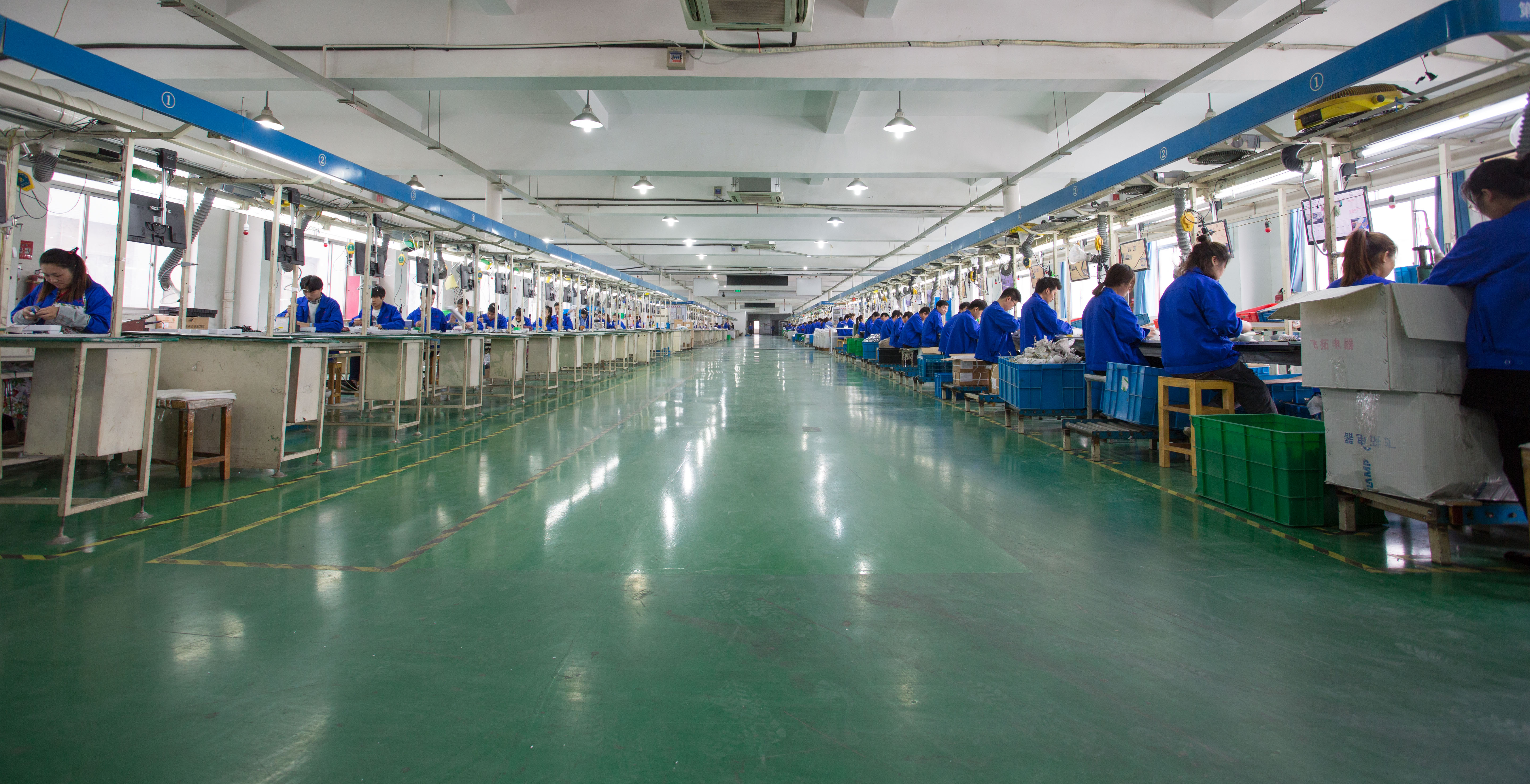
JIMING states a lead time of 30–45 days, with a monthly capacity of 400,000 sets, a 100% unit test protocol and a stated response commitment of 24 hours on incoming requests. Production runs across two company-owned facilities — Ningbo in China and Haiphong in Vietnam — and the Vietnam site is described as running three assembly lines at approximately 50% capacity with infrastructure to scale to nine lines. In planning terms, the stated 30–45 days is the production window; the calendar should also absorb artwork and logo approval, packaging confirmation and certificate verification before the purchase order is released. Buyers who need a schedule commitment should raise the specific model and configuration early, because the lead time applies to a confirmed specification rather than a product family.
Conclusion: Four Marks, Four Questions
The practical lesson of UL 924, UL 94V-0, IP65 and the 0–40 °C damp-location line is that they answer four separate questions: is this model listed for emergency lighting in the destination market, is the housing material classified for flame resistance, how well does the enclosure resist dust and water, and where may the fixture legally be installed. A submittal that answers all four is auditable. A submittal that answers one and implies the rest will be tested at inspection, which is the most expensive place to discover a gap.
For buyers evaluating a supplier, the same discipline applies to the factory behind the product: a listing plus a housing classification plus an ingress rating is a product story, while an ISO 9001:2015 system, a stated 100% unit test protocol and a documented certificate file make that product story repeatable across orders.
Next Step for Your North American Programme
If you are building a submittal package, JIMING can supply the model-level documents behind the specifications above — the UL 924 certificate record for the emergency light series, the ISO 9001:2015 certificate, and the product datasheets for the JLEU9 twin-head unit, the JREEL2RM and JELBEX1GC exit signs, and the LE518 bulkhead. OEM and ODM programmes start from a 200 pcs minimum order quantity and cover battery type, housing colour, input voltage, logo and packaging.
Send your model list, destination market and voltage requirement to info@ijiming.com, or review the range at www.ijiming.com. Contact: +86-135-6655-7272. Address: No. 546, Qiye Road, Zhouxiang Town, Cixi City, Ningbo, China.
Have Questions or Need More Details?
Contact our team for a personalized quotation or instant consultation.
Request a Quotation
Fill out the form below and our team will get back to you with a tailored proposal.
WhatsApp Direct Chat
Prefer to chat in real-time? Message us on WhatsApp for instant assistance & quick answers.
- Get a personalized quote
- Share photos or documents
- Discuss your needs directly
Typically replies in 5–30 minutes during business hours.