Emergency Light Supplier Comparison: What Separates High-Value OEM Partners from Simple Assembly Factories
Buyers evaluating an emergency light supplier for OEM or ODM programs often reach a decision point where price-per-unit is no longer the only variable. The real comparison is between suppliers who simply assemble components and suppliers who control the full manufacturing chain—from plastic injection molding to PCB design and final testing.
This article provides a practical comparison framework for procurement teams, project buyers, and brand owners who need to decide between a vertically integrated emergency lighting manufacturer and a simple assembly factory. It also explains why UL-listed exit signs, ceiling-mounted emergency lights, wall-mounted emergency lights, and LED emergency downlights require supplier capabilities well beyond basic assembly.
The Core Problem: Why Emergency Light Supplier Comparison Is More Than Price per Unit
Emergency lighting is a safety-critical product category. A failure during a power outage can create legal liability, building-code violations, and serious safety risks. Unlike general lighting, emergency lights must comply with certification standards such as UL 924 in the United States, which requires emergency lighting and exit signs to provide at least 90 minutes of illumination during a power failure.
The cost of non-compliance is high. An emergency light supplier that saves a buyer a small amount per unit but fails in quality, certification, or long-term consistency can create far larger costs downstream—recalls, site rejections, rework, and reputational damage.
Industry Background: A Market Tightened by Regulation and Tariff Complexity
The global emergency lighting market was valued at USD 7.82 billion in 2025 and is projected to reach USD 12.4 billion by 2033, growing at a CAGR of 6.2%. North America dominated the market in 2025 with a revenue share of 37.4%, driven by strict safety regulations.
China remains a major sourcing origin for emergency lighting products. In 2024, China exported USD 31.4 billion in light fixtures, with the United States and Germany among the largest destinations. However, US import tariffs have pushed many buyers to seek alternative manufacturing bases. This explains why dual-hub manufacturing—for example, production capacity in both China and Vietnam—has become a strategic advantage for suppliers serving North American customers.
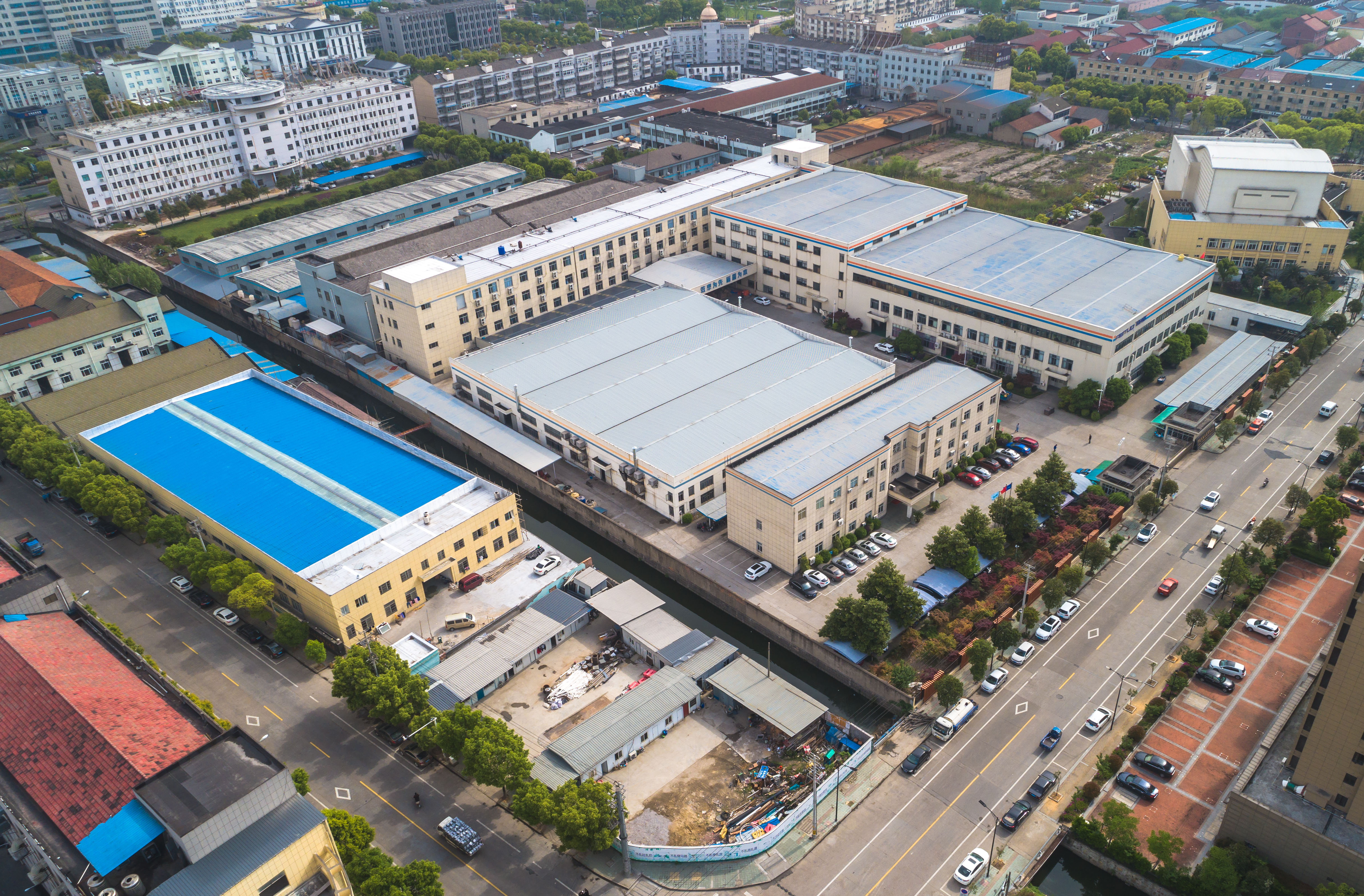
A vertically integrated emergency lighting manufacturer controls production across multiple departments, from SMT to final assembly.
Detailed Solution: What to Compare When Evaluating Emergency Light Suppliers
When comparing an emergency light supplier, buyers should evaluate six areas: manufacturing model, product scope, certification coverage, engineering capability, production capacity, and total cost structure. Each area has a direct impact on project outcomes.
1. Manufacturing Model: Vertically Integrated vs. Simple Assembly
The most important structural difference is whether the supplier operates a vertically integrated manufacturing model or simply assembles bought-in components.
A vertically integrated emergency lighting manufacturer controls precision plastic injection molding, PCB design and assembly, final assembly, and testing under one roof. This matters for OEM and ODM projects because changes to housings, circuit boards, or battery configurations can be managed internally without depending on multiple third-party suppliers.
Compared to simple assembly factories, a vertically integrated manufacturer offers distinct advantages. In-house injection molding reduces supply chain dependency and improves consistency of plastic components. In-house PCB design and assembly allow engineers to optimize circuit design for better efficiency, which directly supports UL-listed emergency light performance such as runtime, standby power consumption, and charging behavior.
For procurement professionals, the practical consequence is higher initial efficiency and lower long-term cost. A product designed and built with controlled processes tends to perform consistently over its service life, reducing warranty returns and field failures.
2. Certification Coverage: UL, CSA, and Beyond
Buyers sourcing for North America typically require UL-listed exit signs and UL-listed emergency lights. UL 924 is the governing standard for emergency lighting and exit signs in the United States.
In 2022, UL 924 was updated to require active and continuous detection of normal power, moving away from passive detection devices. This means a supplier’s current product designs, not just legacy certifications, must reflect the updated standard. Buyers should ask whether a supplier’s UL listings cover current production and whether engineering teams understand the 2022 detection requirements.
A complete certification profile for North American projects includes UL, CSA, and compliance with NFPA, OSHA, NEC, and IBC requirements. For global programs, CE, REACH, and RoHS compliance are commonly required. A supplier that treats certifications as ongoing engineering requirements rather than one-time paperwork is better positioned for long-term reliability.
3. Product Scope: Matching Supplier Strengths with Your SKU Mix
An emergency light supplier may carry a wide range of SKUs or remain specialized. For buyers managing diverse projects, the ability to source several product types from one qualified supplier reduces qualification effort and logistics complexity.
Common product categories to evaluate include:
- Exit signs and exit light fixtures, typically required above doorways and along egress paths.
- Ceiling-mounted emergency lights, often used in open areas to maintain minimum illumination levels.
- Wall-mounted emergency lights, practical for corridors, stairwells, and rooms where ceiling mounting is not feasible.
- Bulkhead emergency lights, a durable form factor commonly used in commercial and industrial environments.
- LED emergency downlights, increasingly popular for architectural integration while maintaining emergency functionality.
JIMING, for example, specializes exclusively in emergency lighting, including emergency lights, exit signs, bulkhead emergency lights, LED emergency drivers, and emergency ballasts. For a brand buyer or importer, this kind of specialization supports consistent quality across a focused product range.
4. Engineering and OEM/ODM Capability
Decision-stage buyers often need more than a standard catalog product. They need tooling modifications, custom PCB layouts, specific battery configurations, or housings adapted to regional market preferences.
Engineering capability should be evaluated through several lenses:
- Mold tooling: Molds engineered for a high number of cycles, such as over 500,000 cycles, provide consistent plastic components over the life of a product program.
- PCB design: The supplier should demonstrate the ability to design, develop, and adapt PCBs to meet 100% of your technical specifications.
- Testing infrastructure: In-house laboratory equipment and aging-test procedures improve confidence in long-term reliability.
- IP protection: For OEM/ODM programs, strict IP protection and NDA-ready processes protect your product designs.
JIMING operates a 50+ engineer R&D team and offers OEM/ODM partnerships with internationally recognized brands. Its in-house capabilities include plastic injection molding, PCB design and assembly, final assembly, and testing.
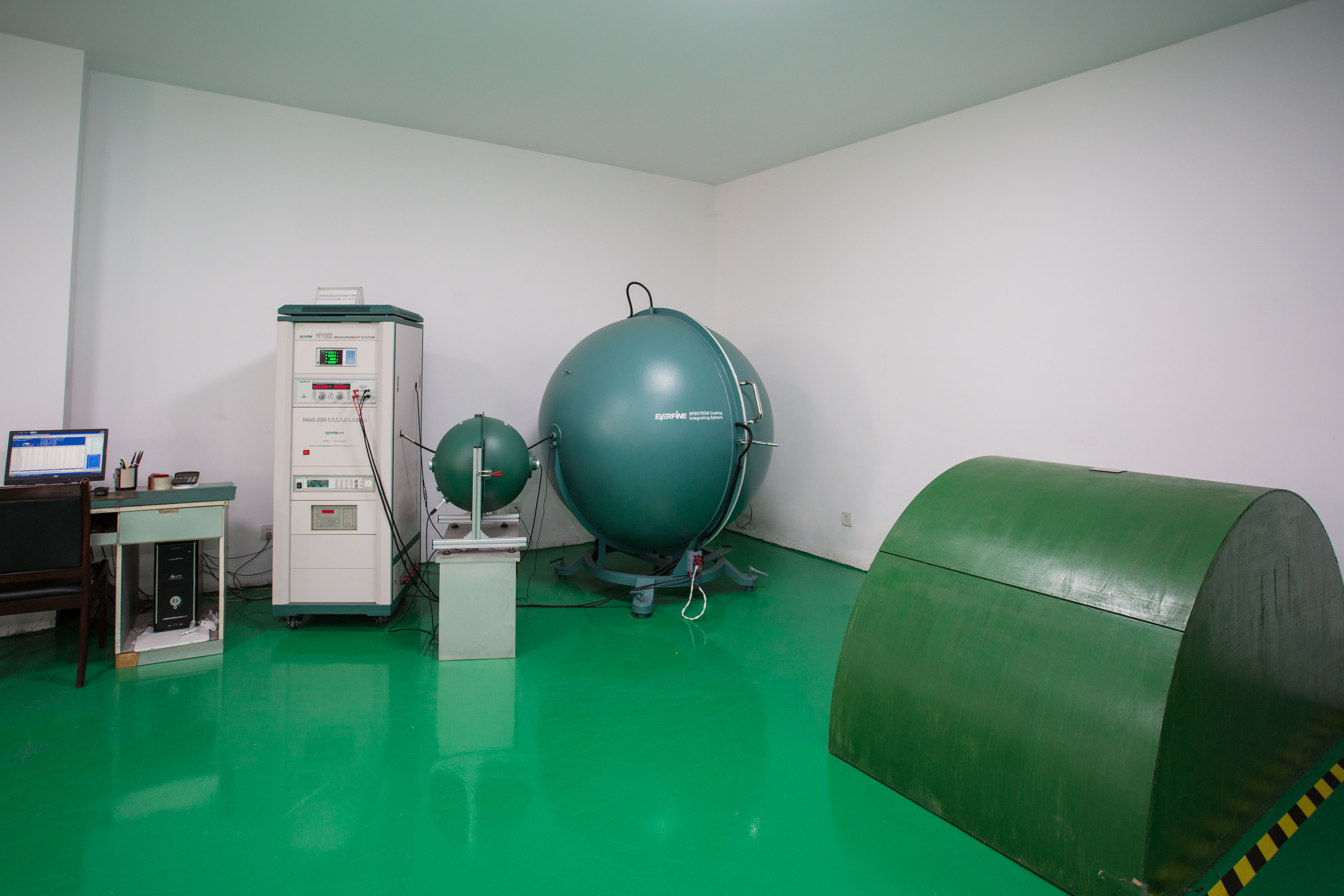
Laboratory testing is a key indicator of a supplier’s ability to maintain UL-listed compliance across production runs.
5. Production Capacity and Supply Chain Resilience
Capacity is not just about the maximum number of units a factory can produce. It is about whether the supplier can maintain stable delivery when demand spikes or when one region experiences disruption.
JIMING operates two company-owned production facilities: a China factory of 70,000 m² and a Vietnam factory of 38,000 m². Its Vietnam facility currently runs 3 assembly lines at approximately 50% capacity, with infrastructure designed to scale to 9 lines when demand increases. The company produces 5,000,000 sets annually and employs more than 1,000 people.
For buyers, this creates two practical benefits. First, dual sourcing from China and Vietnam can offset US import tariff exposure. Second, having a factory on self-owned land in Vietnam provides long-term cost stability and the possibility of official Vietnam Origin Certificates.
6. Total Cost Structure: Why the Cheapest Unit Price Is Not the Cheapest Total Cost
When comparing emergency light suppliers, the unit price is the most visible number, but not the most meaningful one. Total cost includes quality, warranty risk, certification maintenance, delivery reliability, and communication efficiency.
Compared to alternatives, a vertically integrated product offers higher initial efficiency and lower long-term cost. That efficiency comes from optimized circuit design, controlled manufacturing processes, and fewer supply chain handoffs. For a buyer running a large program, even a small improvement in field failure rate can outweigh a modest price difference per unit.
Step-by-Step Breakdown: How to Run a Decision-Stage Supplier Comparison
Use the following workflow to compare shortlisted emergency light suppliers for an OEM or ODM program.
- Define your product portfolio. List the SKUs you plan to source, including exit signs, ceiling-mounted emergency lights, wall-mounted units, bulkhead lights, and LED emergency downlights.
- Verify certifications against current standards. Confirm UL 924 listings, CSA where needed, and the supplier’s understanding of the 2022 UL 924 active-detection update.
- Audit the manufacturing model. Determine whether the supplier controls injection molding, PCB design, PCB assembly, final assembly, and testing in-house.
- Review engineering depth. Ask about mold life, PCB adaptation capability, R&D headcount, and access to in-house laboratory testing.
- Assess capacity and geographic risk. Evaluate factory size, assembly line utilization, and whether a second manufacturing base exists outside China.
- Model total cost, not unit cost. Compare warranty terms, defect rates, certification maintenance, and logistics options before making a final decision.
Use Cases: Which Buyer Profile Needs Which Supplier Type
Not every buyer needs a vertically integrated manufacturer. The right choice depends on program size, product complexity, and market requirements.
Case 1: Brand owner sourcing a full exit sign and emergency light program. A North American brand owner needs consistent UL-listed products across multiple SKUs, with the ability to adapt designs over time. A vertically integrated supplier with dual manufacturing hubs reduces the risk of supply disruption and simplifies quality management.
Case 2: Importer looking for the lowest first-unit cost. An importer purchasing standard products in high volume may choose a simple assembly factory if the price advantage is significant. The trade-off is higher dependency on third-party component supply and less control over quality consistency.
Case 3: Project buyer needing custom bulkhead emergency lights. A project requiring a specific enclosure color, battery configuration, or PCB layout benefits from a supplier with in-house mold tooling and PCB design. Simple assembly factories typically lack the engineering resources to support these changes efficiently.
Case 4: Retailer managing tariff exposure. A retailer importing into the US may prioritize suppliers with Vietnam production capacity to reduce tariff risk. A dual-hub manufacturer can shift production between China and Vietnam based on cost and delivery requirements.
Comparison Table: Vertically Integrated Manufacturer vs. Simple Assembly Factory
| Comparison Dimension | Vertically Integrated Manufacturer | Simple Assembly Factory |
|---|---|---|
| Manufacturing model | In-house injection molding, PCB design & assembly, final assembly, and testing | Assembles purchased components |
| Engineering capability | In-house R&D team; PCB adaptation to customer specifications | Limited; dependent on component suppliers |
| Quality consistency | Controlled processes; test-every-unit protocols | Varies based on component quality and process controls |
| OEM/ODM suitability | High; supports custom housings, PCBs, and branding | Low to moderate; limited customization |
| Efficiency | Optimized circuit design for better efficiency | Dependent on external component design |
| Cost structure | Higher initial efficiency; lower long-term cost | May offer lower first cost; higher long-term risk |
| Best for | OEM & ODM projects, brand buyers, regulated markets | Simple, high-volume standard products |
Risk Considerations When Choosing an Emergency Light Supplier
A poorly chosen supplier can expose a buyer to four risk categories:
- Product quality and compliance risks. Failures in emergency lighting can violate building codes and create safety hazards. A supplier with an ISO 9001-certified quality management system and 100% in-process quality control reduces this risk.
- Supply chain disruptions. Single-region production is vulnerable to logistics and trade-policy shocks. Dual sourcing from China and Vietnam provides a buffer.
- Technological obsolescence. Standards such as UL 924 evolve. Suppliers who invest continuously in R&D are better positioned to keep their products current.
- Cost stability risks. Raw material price fluctuations can destabilize long-term pricing. Long-term agreements with key material suppliers and multi-region production help balance cost changes.
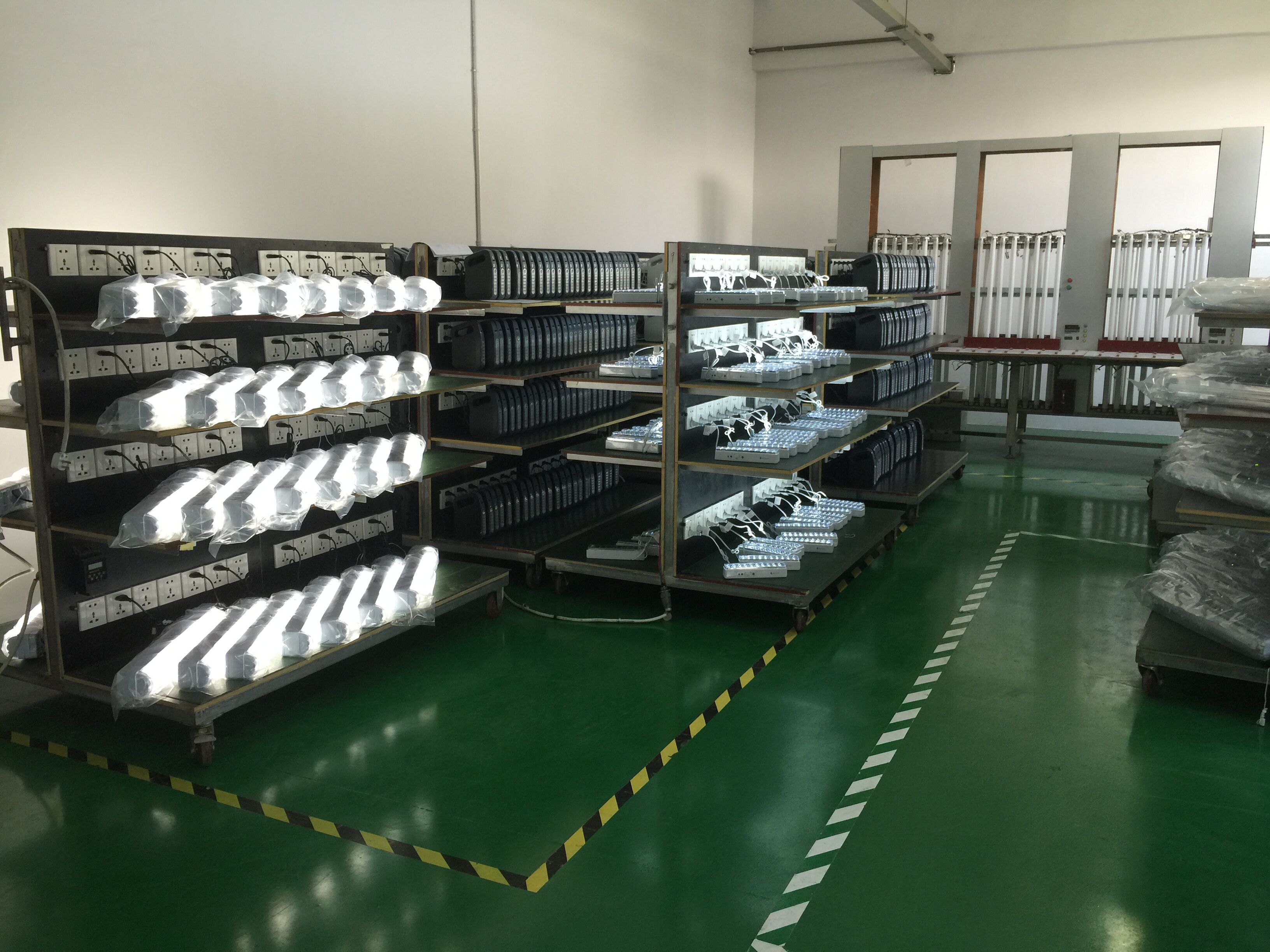
Aging tests verify that emergency light products perform reliably over time before shipment.
FAQ
Does an emergency light supplier need UL certification for every SKU?
Yes, for products sold into the United States, each emergency light or exit sign generally needs its own UL listing. UL 924 mandates that emergency lighting and exit signs provide at least 90 minutes of illumination during a power failure. A supplier should be able to show the UL file numbers that cover the specific SKUs you plan to source, rather than relying on a general company certification claim.
Can a supplier with a simple assembly model handle OEM emergency light programs?
It depends on the complexity of the program. Simple assembly factories can handle basic product assembly from supplied components, but they face limitations when a buyer needs custom PCB layouts, modified housings, or strict UL-listed compliance engineering. A vertically integrated manufacturer that controls PCB design and injection molding can support a wider range of OEM and ODM requirements, from prototype changes to production-scale customization.
What is the best way to compare emergency light supplier quotes?
Compare quotes on total cost rather than unit price alone. Include certification maintenance, warranty terms, defect rates, lead times, and the cost of engineering changes. A supplier with optimized circuit design and in-house manufacturing may offer higher initial efficiency and lower long-term cost, even when its quoted price is not the lowest.
What are the benefits of a China-Vietnam dual manufacturing base for emergency lights?
A dual manufacturing base gives buyers two strategic advantages: supply chain resilience and tariff flexibility. If one region faces disruption, the other can maintain production. For North American buyers, Vietnam production can also reduce exposure to US import tariffs compared with China-only sourcing. JIMING, for instance, operates a 70,000 m² factory in China and a 38,000 m² factory in Vietnam, allowing production shifts based on demand and cost requirements.
Can a buyer receive a sample or quotation before placing a large emergency light order?
Yes. Most qualified suppliers provide samples and quotations as a standard part of the evaluation process. To get an accurate quote, describe the target SKUs, required certifications, projected annual volume, and any OEM or ODM customization needs. A supplier can then confirm whether its current UL-listed products match your program or whether engineering modifications are required.
Ready to evaluate JIMING for your next emergency lighting program?
Contact us to request samples, a catalog, or a project-specific quotation for UL-listed exit signs, ceiling-mounted or wall-mounted emergency lights, bulkhead fixtures, and LED emergency downlights.
Email: inquiry-sgzt@ijiming.com | WhatsApp: +86-135-6655-7272
Have Questions or Need More Details?
Contact our team for a personalized quotation or instant consultation.
Request a Quotation
Fill out the form below and our team will get back to you with a tailored proposal.
WhatsApp Direct Chat
Prefer to chat in real-time? Message us on WhatsApp for instant assistance & quick answers.
- Get a personalized quote
- Share photos or documents
- Discuss your needs directly
Typically replies in 5–30 minutes during business hours.