
Emergency Lighting 101: Exit Signs, Combo Units, Bulkhead Lights, and Downlights
Emergency lighting is a category of safety equipment, not a single product. Buyers, facility managers, and specifiers often begin sourcing with a broad search for an emergency light supplier, then discover that the market contains exit signs, exit sign combo units, bulkhead emergency lights, emergency downlights, and standalone emergency lights with single or dual heads. Each category solves a different part of an egress and illumination plan.
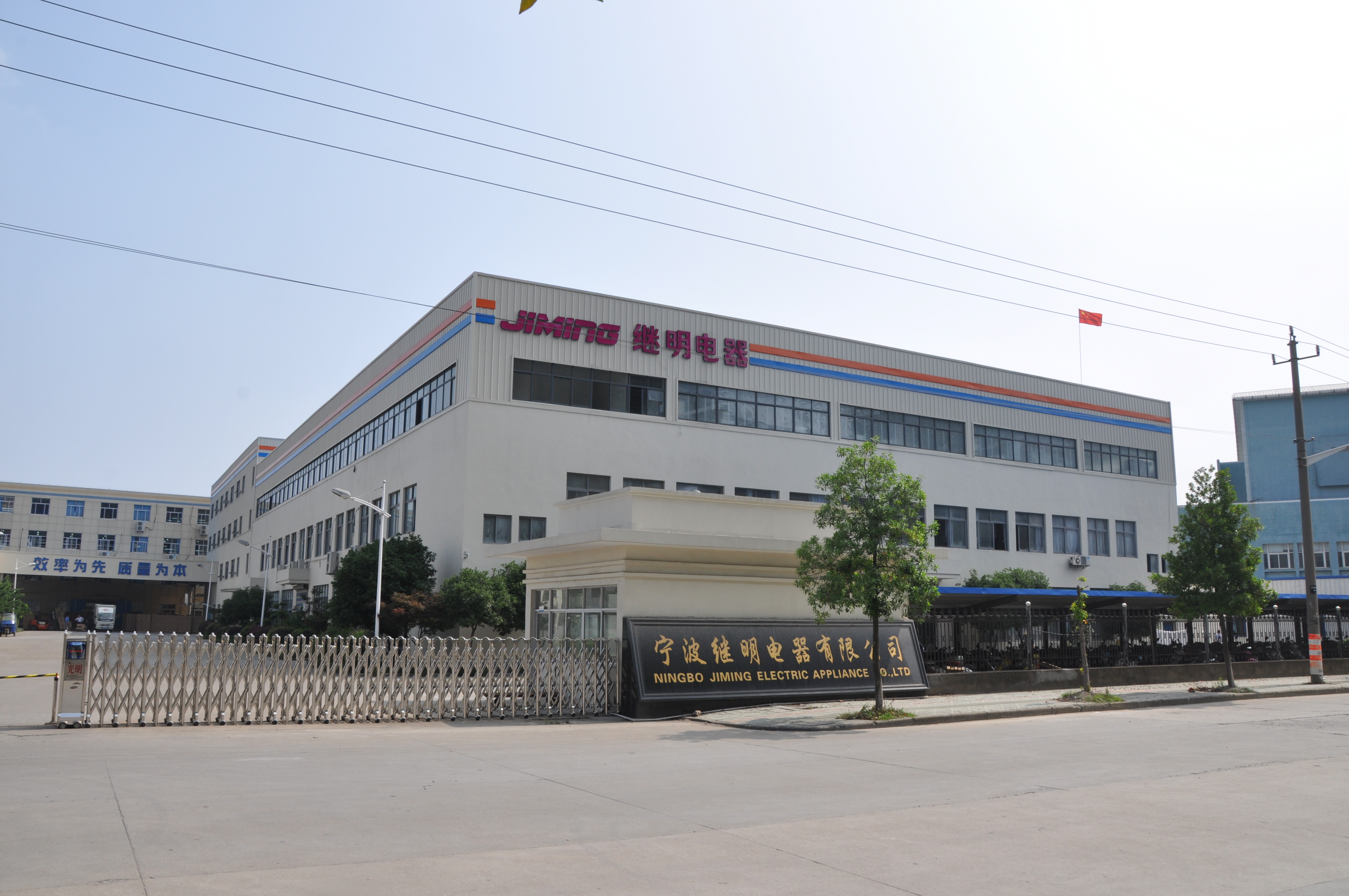
This explainer defines the core categories before a buyer requests samples or a quotation. It uses verified product examples from Ningbo JIMING Electric Appliance Co., Ltd. (JIMING), an emergency lighting manufacturer established in 1967 with manufacturing operations in Ningbo, China and Haiphong, Vietnam. The aim is educational: help buyers understand what each product type does, which specifications matter, and where to ask for evidence.
Problem Definition: Why Emergency Lighting Categories Get Confused
The first sourcing problem is category confusion. A buyer may search for an exit light supplier or emergency light supplier and receive results for products that look similar but perform different functions. An exit sign identifies the egress route. An emergency light provides illumination when normal power fails. A combo unit combines both functions in one housing. A bulkhead light provides a robust, often sealed luminaire for walls and circulation areas. A downlight provides recessed or surface-mounted emergency illumination in ceilings.
The second problem is specification matching. Two products may share a similar shape but differ in voltage, battery chemistry, emergency runtime, mounting method, face configuration, environmental rating, and test features. For example, JLEU9 and JLEC2BCW are listed with 120/277VAC dual voltage operation, while LE518 and DLB300 are listed for 220-240V 50/60Hz supply. Those are different project applications, not interchangeable options.
The third problem is compliance language. A product page may mention UL 94V-0 housing material, UL/cUL product designation, IP65 ingress protection, or indoor damp location listing. These are not interchangeable claims. UL 94V-0 describes a plastic housing flame rating. UL 924 is the safety standard for emergency lighting and power equipment in the North American market. Buyers should verify the exact listing scope for each model rather than treating one compliance phrase as a substitute for another.
Industry Background: What Buyers Need to Know Before Sourcing
Emergency lighting sits at the intersection of electrical specification, building safety, and maintenance planning. UL Solutions identifies UL 924 as the Standard for Emergency Lighting and Power Equipment and states that UL 924 evaluation supports requirements associated with NFPA 101, NFPA 1, and NFPA 70 Article 700. In practical sourcing terms, that means a buyer should look beyond the product shape and verify the standard pathway, listing evidence, and installation requirements for the target market.
The North American context is not the only context. The examples in this article include products listed for 120/277VAC dual voltage operation for North American-style projects and products listed for 220-240V 50/60Hz supply for other markets. A buyer sourcing from an emergency light supplier in China, Vietnam, or another manufacturing base should confirm voltage compatibility, certification scope, and documentation before comparing price.
Market research also frames the category as a long-term safety investment. Mordor Intelligence estimates the global emergency lighting market at USD 8.05 billion in 2026, with a CAGR of 10.05% through 2031. That estimate is useful as background, but it does not replace SKU-level verification. Buyers still need model-specific datasheets, samples, and compliance evidence.
JIMING operates two manufacturing hubs in Ningbo, China and Haiphong, Vietnam, with a combined area of 108,000 m2. For buyers evaluating an OEM Emergency Lighting Manufacturer, that footprint is relevant to supply-chain discussions, but it does not by itself prove product compliance. The product-level facts below should be checked against the exact SKU and order specification.
Detailed Solution: The Core Emergency Lighting Categories
The most useful way to learn emergency lighting is to start with function, then move to specification. The categories below are not ranked. They are different tools for different parts of a building safety plan.
Exit Signs: Identifying the Egress Route
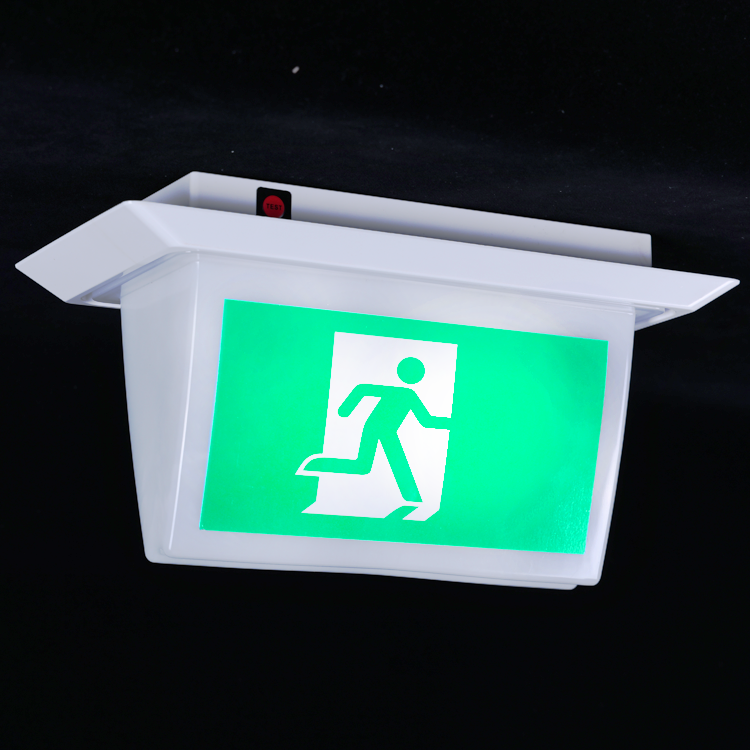
An exit sign is an illuminated legend that identifies an exit or directional route. Buyers evaluating an exit sign supplier should confirm letter size, face configuration, directional indicators, voltage, battery type, and environmental rating. In the JIMING catalogue, model 297 is a running man exit sign with 5 green LED lights, a 3.6V 500mAh Ni-Cad battery, 110-240V 50/60Hz rated supply voltage, maintained operation, multi-angle wall mounting, ceiling mounting, IP20, and approximately 6 hours working time.
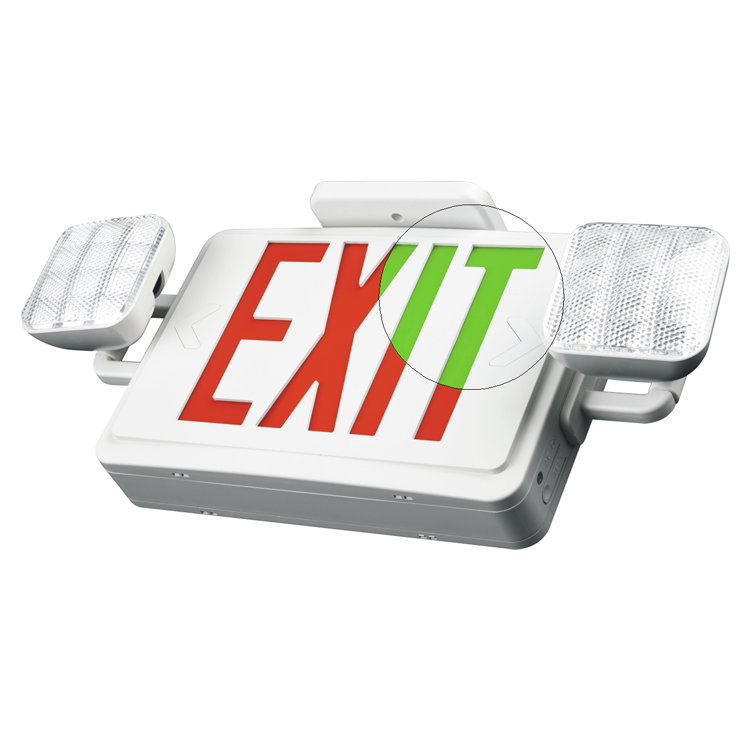
Exit signs can be single-face or double-face. Single-face units are typically used where the sign is viewed from one direction. Double-face units are used where viewers may approach from either side. Removable directional indicators allow the installer to point the legend toward the correct egress direction. Buyers should also confirm whether the sign includes a test switch and charge indicator, because maintenance teams need a practical way to verify emergency operation.

Exit Sign Combo Units: Signage and Illumination in One Housing
An exit sign combo unit integrates an exit legend with emergency lamp heads. This category is useful where the specification calls for both egress identification and local emergency illumination from one mounting location. JLEC2BCW is a bi-color LED combo emergency exit sign with LED heads. Its listed features include 6-inch letters with 3/4-inch stroke, red and green letter options, SALIDA legend availability, single or double face, removable directional indicators, universal J-box mounting, 120/277VAC dual voltage operation, 2 x 8pcs 2835 SMT LED lamp heads, a 3.6V 1200mAh Ni-MH battery, minimum 90 minutes emergency operation, maximum 24 hours recharge time, and a test switch and charge indicator.
A combo unit is not automatically a replacement for all emergency lighting in a corridor. It combines two functions, but the project may still need wall-mounted emergency lights, bulkhead lights, or downlights to meet illumination coverage and egress path requirements. The combo should be selected because the layout benefits from a combined sign-and-light location, not because it reduces the number of product categories on a purchase order.
Bulkhead Emergency Lights: Robust Wall and Circulation Lighting
A bulkhead emergency light is a wall-mounted or surface-mounted luminaire with a robust housing, often used in circulation areas, stairwells, service corridors, warehouses, parking areas, and other spaces where durability and ingress protection matter. LE518 is a slim bulkhead emergency light with a clear polycarbonate diffuser and ABS housing, 20pcs SMD3528 LEDs, 3 hours maintained operation, maintained or non-maintained mode, 220-240V 50/60Hz supply, 200 lm output, 6000-7000K color temperature, a 3.2V 2000mAh LiFePO4 battery, charging time of 24 hours or less, 3-hour discharge time, and IP65 rating.
LE518 also illustrates a useful category boundary. The datasheet states that it can be converted to edge-lit exit signs by accessories and offers an optional multi-directional sticker legend kit. That does not make every bulkhead light an exit sign. It means the model has an accessory path for projects that need a compact edge-lit exit sign format. Buyers should confirm the accessory set, legend, and installation method if they intend to use the product in that way.
Emergency Downlights: Ceiling-Based Emergency Illumination
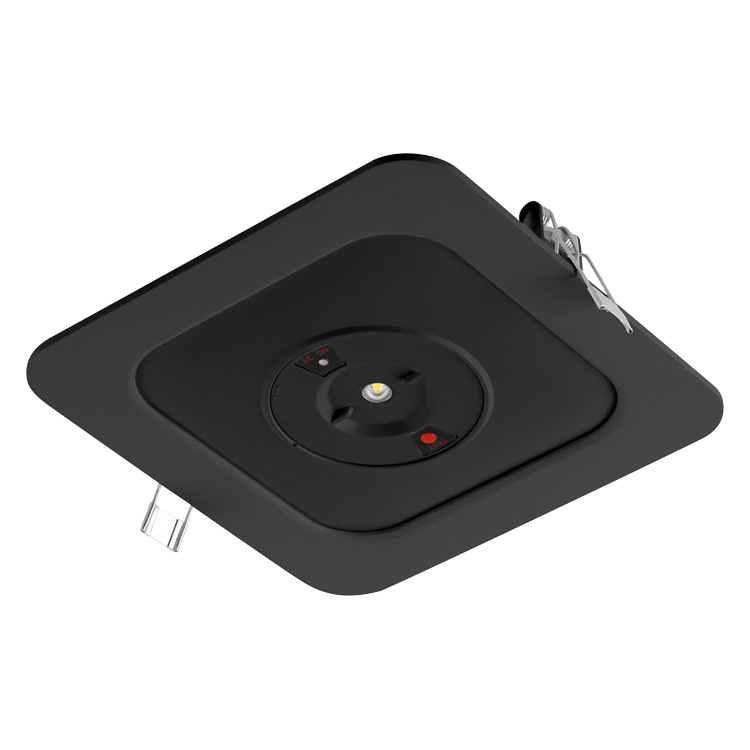
An emergency downlight LED is used where emergency illumination should come from the ceiling plane rather than from a wall-mounted bulkhead or a twin-head unit. DLB300 is a plastic-housing LED emergency downlight suitable for surface-mounted and embedded-mounted installation. Its listed features include one 3535 LED, interchangeable installation method, replaceable lenses with circular light or polarized light options, ambient temperature 5-40 degrees C, maintained and non-maintained operation, 220-240V 50/60Hz supply, AC input power 5.0W and DC input power 2.0W, 3.2VDC output voltage, 3W output power, one SMD3535 LED, AC maximum 200 lm and DC maximum 300 lm, 6000-6500K color temperature, LiFePO4 3.2V 4000mAh battery, 24-hour charging time, and 3-hour discharge time.
Downlights are often specified in commercial, healthcare, education, transportation, industrial, hospitality, residential, infrastructure, and public safety sectors. The key buyer question is not simply whether a downlight looks appropriate, but whether the exact model supports the required mounting method, lens type, runtime, and environmental conditions.
Standalone Emergency Lights and Dual-Head Units
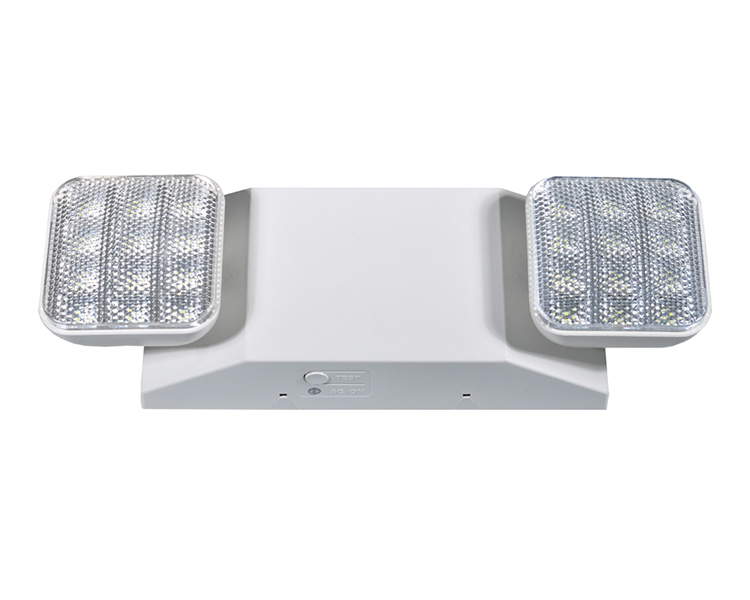
Standalone emergency lights provide illumination without acting as an exit sign. A common format is the dual-head unit, which uses two adjustable lamp heads to direct light along a path. JLEU9 is a UL/cUL twin-head LED emergency light with injection-molded thermoplastic ABS housing, UL 94V-0 flame rating, wall-mount suitability, universal J-box mounting, 120/277VAC dual voltage operation, 2 x 12pcs ultra-bright 2835 SMT LED lamp heads, a 3.6V 1000mAh nickel-cadmium battery, minimum 90 minutes emergency operation, maximum 24 hours recharge time, a test switch and charge indicator, and a 0-40 degrees C indoor damp location listing.
For an emergency light wall mounted application, a dual-head unit is often easier to aim than a fixed downlight. The trade-off is that the visible lamp heads may not suit every interior design. For a clean ceiling appearance, a downlight may be preferred. For a robust circulation area, a bulkhead may be preferred. The correct choice depends on the space, not on a generic product preference.
Step-by-Step Breakdown: How to Specify the Right Category
A buyer can reduce rework by following a simple sequence. The sequence starts with the building requirement and ends with a sample and documentation request.
- Map the egress path and required signage. Identify where an exit sign is needed, where directional indicators must be visible, and whether the sign is viewed from one or both sides. This step determines whether a standalone exit sign or a combo unit is appropriate.
- Separate signage from illumination. An exit sign identifies the route. Emergency lights illuminate the route. A combo unit can do both from one location, but the project may still require separate wall-mounted, bulkhead, or downlight fixtures for coverage.
- Check voltage and supply compatibility. JLEU9 and JLEC2BCW are listed for 120/277VAC dual voltage operation. LE518 and DLB300 are listed for 220-240V 50/60Hz supply. Do not assume a model is universal-voltage unless the datasheet states it.
- Confirm battery chemistry and emergency runtime. The examples show Ni-Cad, Ni-MH, and LiFePO4 batteries. JLEU9 and JLEC2BCW list minimum 90-minute emergency operation. LE518 and DLB300 list 3-hour discharge time. Runtime claims should be tied to the exact model and test condition.
- Review mounting and face configuration. Wall mount, ceiling mount, surface mount, embedded mount, single face, double face, and removable directional indicators all affect installation. Confirm the mounting method before ordering.
- Match environmental rating to the location. JLEU9 and JLEC2BCW list 0-40 degrees C indoor damp location listing. LE518 lists IP65. DLB300 lists ambient temperature 5-40 degrees C. A damp location, wet location, and dusty industrial area are not the same specification.
- Verify test and charge indicators. JLEU9 and JLEC2BCW list a test switch and charge indicator. These features help maintenance teams check emergency operation. If a model does not list them, ask how testing is intended to be performed.
- Request compliance evidence and a sample. Ask for the exact model datasheet, listing evidence, and a sample for visual and functional review. This is especially important when comparing an exit sign supplier or emergency light supplier on documentation rather than price alone.
Use Cases: Matching Category to Project Context
Commercial Office Egress Lighting Retrofit
In a commercial office building egress lighting retrofit, the specification may call for UL-listed emergency illumination along corridors and exit routes. JLEU9 is a practical example for wall-mounted dual-head illumination because it lists 120/277VAC dual voltage operation, 90-minute minimum emergency operation, and a test switch and charge indicator. The application record for JLEU9 describes an office building egress lighting retrofit with UL Listed requirement. Buyers should still verify the exact UL listing file for the ordered SKU.
Retail and Hospitality Exit Signage
Retail and hospitality projects often need clear exit signage with flexible face and legend options. JLEC2BCW offers red and green letters, SALIDA legend availability, single or double face, and removable directional indicators. For a hotel or motel, maintenance planning should also account for local inspection practices. Minnesota Department of Public Safety guidance describes monthly 30-second activation testing and annual 30-minute power testing for hotel emergency lights. That guidance is jurisdiction-specific, but it illustrates why testable products and clear maintenance access matter.
Warehouse, Parking, and Service Areas
Warehouse, parking, and service areas often need a robust wall-mounted luminaire. LE518 is a bulkhead emergency light with IP65 rating, 3-hour discharge time, and maintained or non-maintained operation. Its optional multi-directional sticker legend kit and accessory conversion path to edge-lit exit signs make it relevant where a compact, durable format is preferred. The buyer should confirm whether the installation is a pure emergency light application or an exit sign application with accessories.
Healthcare, Education, and Commercial Corridors
Healthcare, education, and commercial corridors may prefer a ceiling-based appearance. DLB300 is an emergency downlight with surface and embedded mounting, replaceable circular or polarized lenses, maintained and non-maintained operation, and a 3-hour discharge time. The choice between a downlight and a dual-head unit is often an architectural decision, but the specification must still confirm voltage, runtime, and environmental suitability.
Comparison Table: Four JIMING Examples Side by Side
The table below uses only the product facts provided in the JIMING content units. It is a specification orientation tool, not a ranking. The correct model depends on the project requirement.
| Category | Model | Voltage | Battery | Runtime / Discharge | Mounting / Face | Environmental / Listing Cue | Test / Charge |
|---|---|---|---|---|---|---|---|
| Dual-head emergency light | JLEU9 | 120/277VAC dual voltage | 3.6V 1000mAh Ni-Cad | Minimum 90 minutes | Wall mount; universal J-box | UL/cUL twin-head designation; 0-40 degrees C indoor damp location listed | Test switch and charge indicator |
| Exit sign combo unit | JLEC2BCW | 120/277VAC dual voltage | 3.6V 1200mAh Ni-MH | Minimum 90 minutes | Universal J-box; single or double face; red/green letters; SALIDA available | UL 94V-0 housing flame rating; 0-40 degrees C indoor damp location listed; confirm UL 924 listing for exact SKU | Test switch and charge indicator |
| Bulkhead emergency light | LE518 | 220-240V 50/60Hz | 3.2V 2000mAh LiFePO4 | 3-hour discharge time | Slim bulkhead; accessory conversion to edge-lit exit sign; optional legend kit | IP65; clear polycarbonate diffuser and ABS housing | Not listed in provided datasheet |
| Emergency downlight | DLB300 | 220-240V 50/60Hz | 3.2V 4000mAh LiFePO4 | 3-hour discharge time | Surface or embedded mount; replaceable circular or polarized lens | Ambient 5-40 degrees C; plastic housing | Not listed in provided datasheet |
Note: The absence of a feature in a provided datasheet is not proof that the feature is unavailable. Buyers should request the current datasheet and listing evidence for the exact SKU and order configuration.
FAQ
1. What does UL 924 mean for exit signs and emergency lights?
UL 924 is the safety standard for emergency lighting and power equipment in the North American market. UL Solutions states that UL 924 evaluation supports requirements associated with NFPA 101, NFPA 1, and NFPA 70 Article 700. For a specific product, ask the supplier for the exact listing evidence and confirm that the model on the purchase order matches the listed model. A phrase such as UL 94V-0 describes a housing flame rating and should not be treated as the same thing as a full UL 924 listing.
2. Can a combo unit replace separate exit signs and emergency lights?
A combo unit combines an exit legend and emergency lamp heads in one housing. JLEC2BCW, for example, lists 6-inch letters, red and green letter options, single or double face, two 8-piece 2835 SMT LED lamp heads, a 3.6V 1200mAh Ni-MH battery, and minimum 90-minute emergency operation. However, a combo unit may not provide all illumination coverage required for a corridor. The project may still need wall-mounted dual-head units, bulkhead lights, or downlights for the egress path.
3. How should buyers compare 120/277VAC and 220-240V models?
Start with the project supply voltage. JLEU9 and JLEC2BCW are listed for 120/277VAC dual voltage operation. LE518 and DLB300 are listed for 220-240V 50/60Hz supply. These are different operating ranges and should not be treated as interchangeable. Buyers should also compare battery type, runtime, mounting, environmental rating, and test features before requesting a quotation. Public pricing is not provided in this explainer, so cost comparison should be based on a written quotation for the exact model, options, quantity, and destination.
4. What should a sample evaluation test?
A sample evaluation should confirm the visible housing, legend, face configuration, mounting method, and control features. Check whether the model lists a test switch and charge indicator, as JLEU9 and JLEC2BCW do. Confirm the battery type and stated runtime, and verify the environmental rating for the intended location. For LE518, check the IP65 rating and the 3-hour discharge time. For DLB300, check the surface or embedded mounting, replaceable lens, and 3-hour discharge time. JIMING can provide product datasheets and coordinate sample requests for JLEU9, JLEC2BCW, LE518, and DLB300 through info@jiming.net or https://www.ijiming.com/.
5. What lead-time information should buyers request?
The provided product data does not quote lead time, so buyers should request a written production schedule by SKU, option, and order volume. Include the required voltage, face configuration, legend, mounting accessories, and destination in the request. JIMING operates manufacturing in Ningbo, China and Haiphong, Vietnam, which buyers can discuss with the supplier when reviewing supply continuity for a specific program.
Conclusion: Start with Function, Then Verify the Specification
Emergency lighting sourcing becomes clearer when the buyer separates categories before comparing suppliers. Exit signs identify the route. Combo units combine signage and local illumination. Bulkhead lights provide robust wall-mounted emergency lighting. Downlights provide ceiling-based emergency illumination. Dual-head units provide aimable wall-mounted illumination. Each category has a different specification profile.
The examples in this article show why model-level verification matters. JLEU9 and JLEC2BCW list 120/277VAC dual voltage operation and minimum 90-minute emergency operation. LE518 and DLB300 list 220-240V 50/60Hz supply and 3-hour discharge time. LE518 adds IP65. JLEC2BCW adds red and green letters, SALIDA, and single or double face options. These differences should be matched to the project, not averaged into a generic product claim.
For buyers building a shortlist of an exit light supplier, exit sign supplier, or emergency light supplier, the next step is a documented request: exact model, voltage, battery, runtime, mounting, face or lens configuration, environmental rating, compliance evidence, sample, and quotation. JIMING is an emergency lighting manufacturer established in 1967, with OEM/ODM experience and manufacturing operations in Ningbo, China and Haiphong, Vietnam. Product datasheets and sample coordination are available through the contact below.
Request Datasheets or Samples
For JLEU9, JLEC2BCW, LE518, DLB300, or other emergency lighting models, contact JIMING with your voltage, mounting, runtime, and compliance requirements.
Email: info@jiming.net | Website: https://www.ijiming.com/
Have Questions or Need More Details?
Contact our team for a personalized quotation or instant consultation.
Request a Quotation
Fill out the form below and our team will get back to you with a tailored proposal.
WhatsApp Direct Chat
Prefer to chat in real-time? Message us on WhatsApp for instant assistance & quick answers.
- Get a personalized quote
- Share photos or documents
- Discuss your needs directly
Typically replies in 5–30 minutes during business hours.