
Emergency Lighting for Parking and Security Areas: A Practical Installation Guide
Emergency lighting in parking and security areas is settled by four decisions before any unit is ordered: the escape route drawing, the mounting height and physical protection of each fixture position, the direction of the exit signs along that route, and the test regime the site can realistically maintain. Fixture selection follows from those four decisions. It does not lead them.
This guide is written for the execution stage of a project — the specification is approved, the bill of quantities is being prepared, and the open questions are positional: where each unit goes, how it is fixed, which way the legend faces, and how the installation will be proven at handover. It maps a verifiable product set (twin-head wall-mounted units, bulkhead emergency lights and UL exit signs) to the positions that actually appear in parking structures, security zones, warehouses and hotels, and it separates what the documentation supports from what still has to be confirmed model by model.
Why Parking and Security Areas Fail Emergency Lighting Checks
Three conditions are mild in an office and severe in a parking deck. The first is environmental: ramps, wash-down areas and covered open edges expose fixtures to moisture, while vehicle movement adds dust and occasional impact. The second is geometric: columns, low soffits and turning ramps break lines of sight, so one high-mounted unit rarely covers the route. The third is operational: when normal power fails, a security area is exactly where people are still moving and where monitoring, barriers and staff still need light to work safely.
The resulting failure modes are installation failures rather than product defects. A unit mounted high on a ramp soffit is difficult to reach for the monthly activation test, so the test gets skipped and the record gets signed anyway. A sign that is visible from directly underneath the door but not from the ramp head guides nobody. A fixture chosen from a product family that holds a valid listing, without confirming the listing scope of that particular model, can pass a catalogue review and fail a certificate review.
Each of these is decided at the drawing stage, which is why this guide treats fixture selection as an output of installation planning rather than its input.
The Standards Context Buyers Should Have on the Table
UL 924 is the North American standard for emergency lighting and power equipment. Its published scope covers equipment for unclassified locations intended for connection to branch circuits of 600 volts or less, and the equipment categories include exit signs, emergency luminaires and unit equipment. UL Solutions, which tests and certifies to the standard, states that UL 924 evaluation supports requirements associated with NFPA 101, NFPA 1 and NFPA 70 Article 700, together with international fire and building codes. The standard therefore links the fixture to both the life-safety code and the electrical code; it is not a standalone product mark.
Battery-powered unit equipment is the practical default for this type of project. Kansas Fire Marshal guidance describes battery-powered emergency lights as relatively inexpensive, reliable, readily available off the shelf and easy to install, and refers to tested and listed units being used in practice. Self-contained units on a dedicated circuit suit parking and security work because they avoid a central battery room and let the installation be commissioned deck by deck.
Demand is not the constraint. One commercial research estimate puts the global emergency lighting market at USD 8.05 billion in 2026, growing at a CAGR of 10.05% through 2031. Published totals differ between research houses because the inclusion criteria for smart lighting and signage differ, so the figure is best read as a scale indicator rather than a planning input.
The gap that matters sits downstream of the standard. The drawing says “emergency light”, the certificate says UL 924, and nobody has matched the model on the drawing to the listing scope on the certificate. An emergency light supplier or UL listed exit sign supplier can only support a project to the level of documentation it can produce model by model.
Matching the Fixture Set to the Position
A workable parking and security specification usually needs three fixture families plus one retrofit option, not one universal unit. The mapping below is drawn from published product documentation and states what each item supports and what still requires verification.
Twin-head wall-mounted units for columns, ramp walls and corridors
The JLEU5-UL is a twin-head LED emergency light listed with a 120V/277VAC operating range, a 3.6V 1000mAh nickel-cadmium battery, and a stated minimum 90-minute emergency operation. The dual 120/277VAC range is the practical reason this type suits retrofit-heavy parking work: the same unit can be specified across circuits that were installed to different voltage conventions, which reduces the number of SKUs a multi-deck rollout has to carry.
Higher-output units for loading bays, barrier lines and remote walls
Where a position sits far from the walking route — a loading bay, a toll or barrier line, a high wall in a vehicle yard — output becomes the limiting factor rather than voltage. The JLEU6 is listed as a dual-head emergency light suitable for wall mounting, with 120V–277VAC input, a 6V 4Ah lead-acid battery, a stated minimum 90-minute emergency operation and a 600 lm product designation. Buyers should treat that lumen figure as a designation until a project-specific photometric report is supplied, and should write into the specification that measured output and test conditions will be confirmed at approval.
Bulkhead units for exposed and wash-down positions
Bulkhead emergency lights appear in JIMING's stated product scope alongside emergency lights, exit signs and LED emergency lighting. The bulkhead form is normally specified where a compact enclosed wall-mounted body suits the structure: low walls in covered parking, service corridors, and positions where a slim twin-head unit would sit inside the traffic envelope. The verification step is identical in every case — ingress and location suitability must be read from the model-level listing and datasheet rather than inferred from the product family name.
UL exit signs at decision points
Exit signs do directional work at decision points: the ramp head, the lift lobby, the stair discharge door. JIMING's portfolio lists UL exit signs together with UL LED emergency and security lighting, emergency battery packs and emergency ballasts. Placement and legend are code questions rather than product questions, so the sign schedule should be reviewed against the route drawing before the model is fixed.
Retrofit options for existing decks
Where the luminaire layout in an existing garage is already acceptable, emergency battery packs and emergency ballasts allow a retrofit without re-lamping the deck. Compatibility with the installed driver or ballast remains a project-specific check and should be confirmed against the existing fixture schedule.
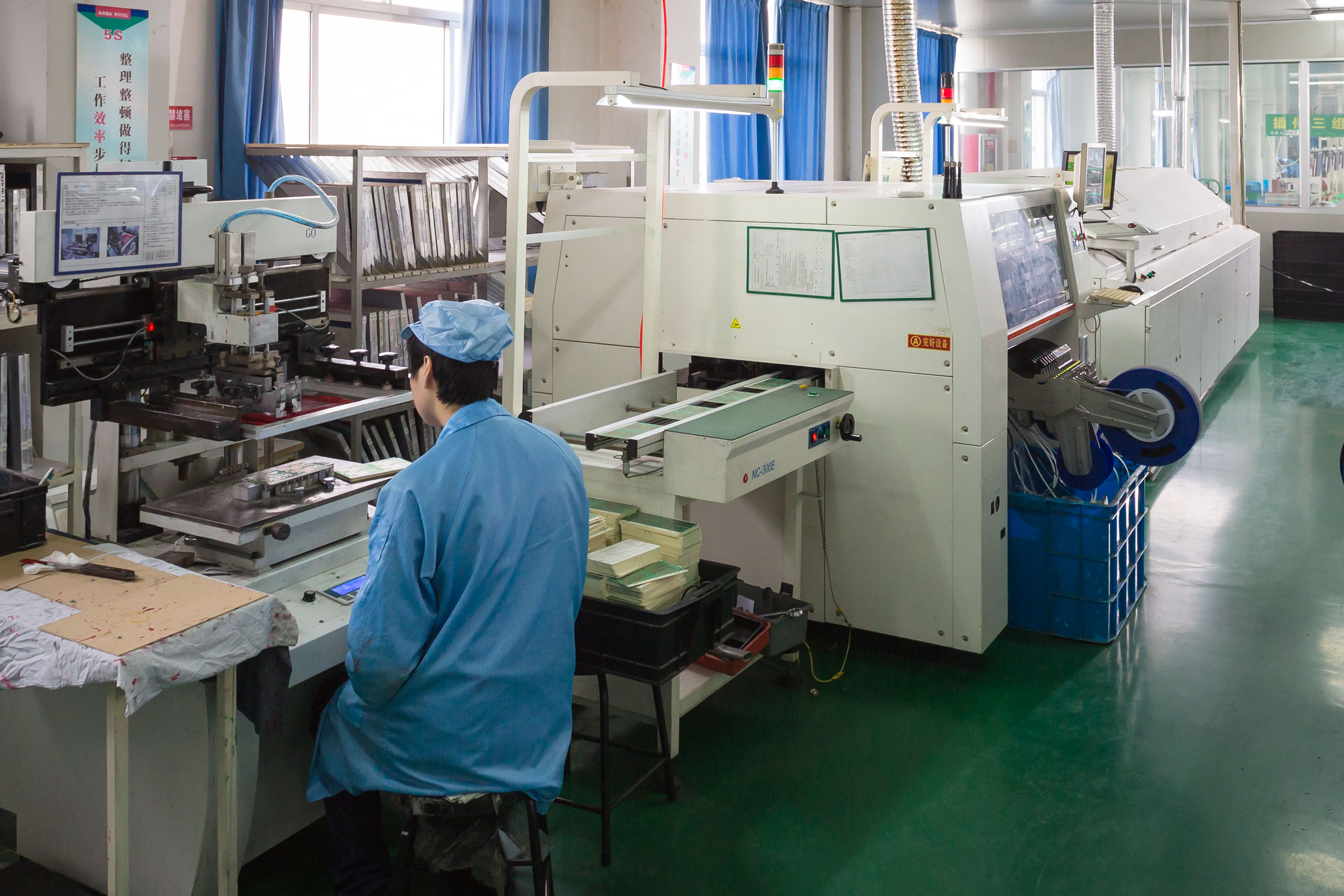
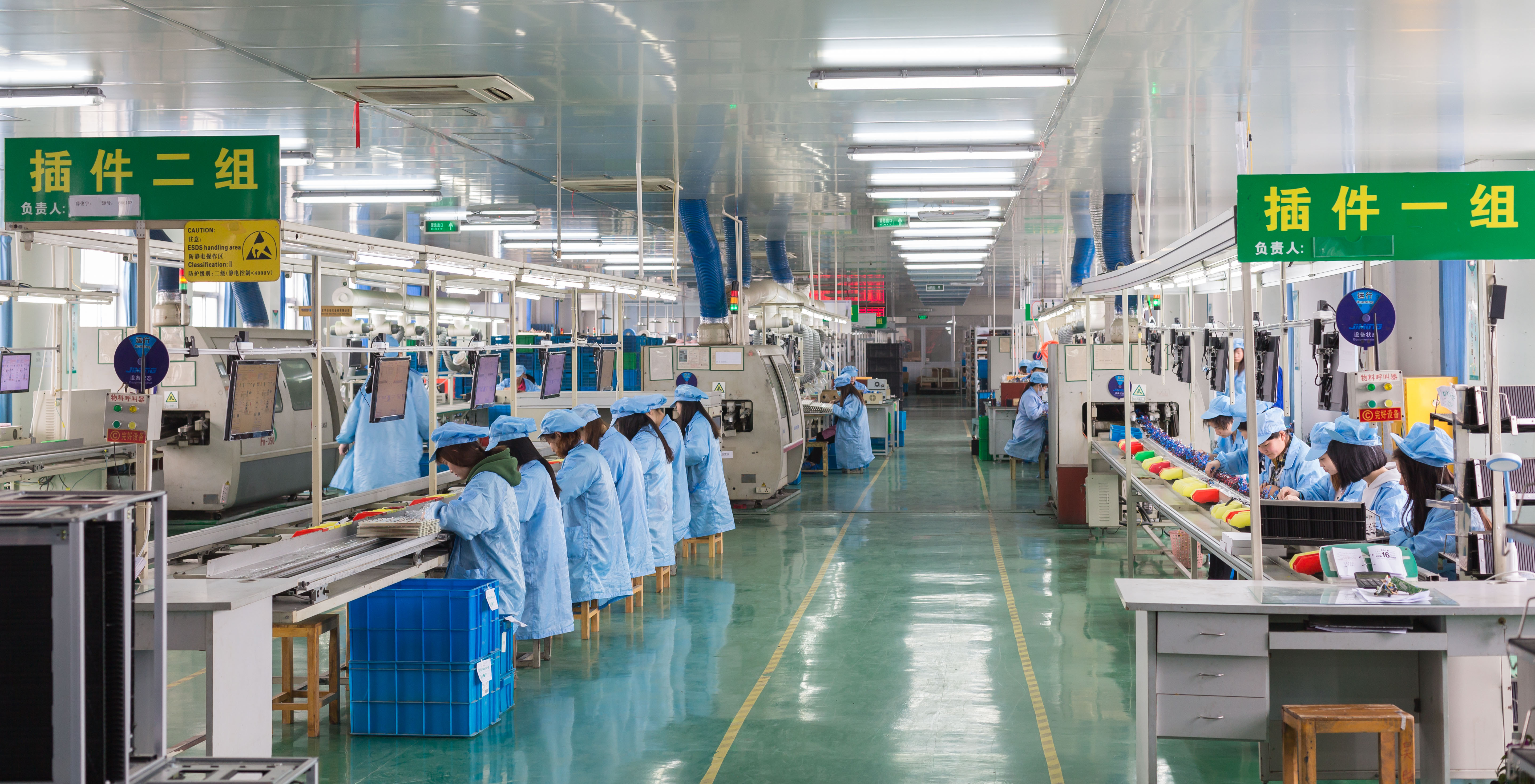
Ningbo JIMING Electric Appliance Co., Ltd. has specialised in emergency lighting since 1967 and operates fully integrated production in Ningbo, China and Haiphong, Vietnam, with ISO 9001 certification dating from 1998. That matters at execution stage for a reason unrelated to branding: a parking project is normally a phased rollout, and every phase needs the same SKU to be available and unchanged across shipments.
Installation Sequence, Step by Step
Step 1 — Draw the escape route before choosing a single fixture
Mark discharge doors, stair entries, lift lobbies and the path between them on the deck plan, including turning points. Every item on the final fixture schedule should be traceable to a point on that drawing. If an item cannot be traced, either it is redundant or the drawing is incomplete.
Step 2 — Assign one fixture type to each position class
Twin-head wall-mounted units on columns and ramp walls; higher-output units where the position is remote from the walking route; bulkhead units on exposed low walls; exit signs at decision points; battery packs where the existing luminaires stay in place. Keeping one type per position class makes the bill of quantities reviewable and keeps the spares list manageable.
Step 3 — Fix mounting height against access and impact
Height has to balance coverage against access. A unit that cannot be reached for the monthly activation test will not be tested, however good its coverage is. Where a position falls inside the traffic envelope — vehicle mirrors, trolley routes, loading equipment — move the unit above the impact line or specify a protected bulkhead body.
Step 4 — Configure sign direction and placement
A sign is read on the approach, not from standing underneath it. Place signs so the legend is visible from the last decision point before the discharge door, and check that arrow direction stays consistent along the whole route rather than only at the door itself. For a UL listed exit sign, the legend configuration is part of the order, so this step has to finish before the purchase order is issued.
Step 5 — Plan voltage, circuit and switching
Confirm the operating voltage of each model against the circuit it will connect to; the JLEU5-UL and JLEU6 are both listed for 120V–277VAC input, which covers most North American deck circuits without a transformer. As a common practice in North American installation, self-contained unit equipment is connected to a circuit that is not disabled by the local lighting switch. That is a wiring decision to be agreed with the electrical contractor at drawing stage rather than discovered at commissioning.
Step 6 — Commission against the local test regime
Test requirements vary by jurisdiction and building type. As one published example, Minnesota Department of Public Safety guidance for hotels and motels describes a monthly 30-second activation test and an annual 30-minute power test, and notes that emergency lighting can be supplied by storage batteries, unit equipment or an on-site generator. Use that as an illustration of the shape of a test regime and confirm the rule that actually applies to the site before commissioning is scheduled.
Step 7 — Write the spares and maintenance plan before handover
Record every device with its location, model, battery type and commissioning result. Battery chemistry drives the replacement interval: the JLEU5-UL uses a 3.6V 1000mAh nickel-cadmium battery and the JLEU6 a 6V 4Ah lead-acid battery, so spares should be planned per model rather than per site. A schedule that mixes chemistries without labelling them creates avoidable confusion at the first replacement cycle.
Four Scenarios and What Changes in Each
Covered parking garage
Moisture on ramps, vehicle impact at low level and sight lines broken by columns. Twin-head units on column faces and ramp walls cover the route, bulkhead units handle exposed low walls, and exit signs sit at ramp heads and stair discharge doors. The dominant risk is test access: mounting height should be chosen with the person who performs the monthly test in mind, not only with the coverage diagram.
Security gatehouse and controlled vehicle zone
A staffed security position has a different requirement from an escape route. When normal power fails, the area still needs to remain usable for monitoring and for controlled vehicle movement. Higher-output twin-head units and consistent signage on the vehicle approach matter more than uniform spacing. Because the site is staffed continuously, the maintenance plan should assume the equipment is relied on in a live operating environment rather than only during drills.
Warehouse and loading dock
High ceilings, forklift traffic and racking that is relocated over time. Ceiling positions reduce damage risk but raise the access problem; wall-mounted twin-head units at protected heights are usually easier to maintain. Racking relocation is a recurring cause of blocked or misdirected exit signage, so the maintenance plan should include a signage check after every layout change.
Hotel back-of-house and guest corridors
Hotels combine guest-area visibility with back-of-house plant that is rarely walked. The Minnesota hotel guidance is a useful reminder that the inspection regime can be explicit — monthly activation and annual power testing. Corridor and stair signage has to be readable from the guest approach, and service corridors need the same coverage as public routes because they are staff escape routes.
Fixture Type by Mounting Position
| Mounting position | Fixture type | Documented specification | Confirm before release |
|---|---|---|---|
| Column faces and ramp walls | Twin-head LED, wall mounted | JLEU5-UL: 120V/277VAC, 3.6V 1000mAh NiCd, minimum 90 minutes | Model-level UL/cUL record; location suitability |
| Loading bay, barrier line, high yard wall | Higher-output twin-head, wall mounted | JLEU6: 120V–277VAC, 6V 4Ah lead-acid, minimum 90 minutes, 600 lm designation | Measured photometric report and test conditions |
| Exposed low walls and service corridors | Bulkhead emergency light | Category listed in JIMING product scope | Ingress and location rating per model |
| Ramp head, lift lobby, stair discharge | UL exit sign | Category listed in JIMING product scope | Legend and arrow configuration; viewing distance per local code |
| Existing luminaires retained | Emergency battery pack or ballast | Category listed in JIMING product scope | Compatibility with installed driver or ballast |
Specifications shown are as published for the listed models. Category rows carry no numeric claim because model-level data must be confirmed per order.
Designing the Installation for Its Maintenance Life
An installation is only compliant on the day it is commissioned. What keeps it compliant afterwards is the combination of a maintenance regime, a stable SKU and a supply route that survives the years between phases. That is the long-horizon part of a parking lighting project, and it is usually decided at the same time as the fixture schedule.
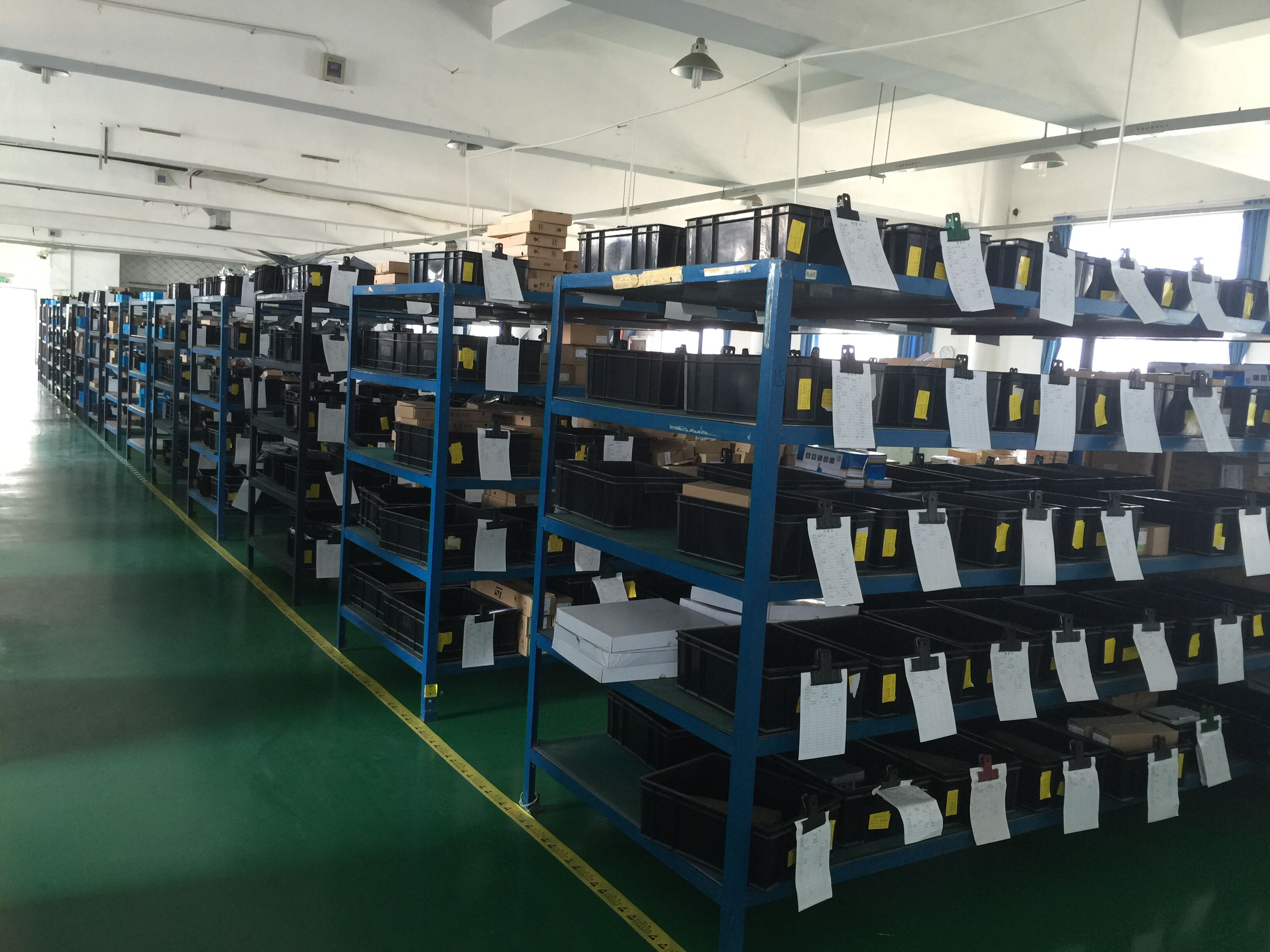
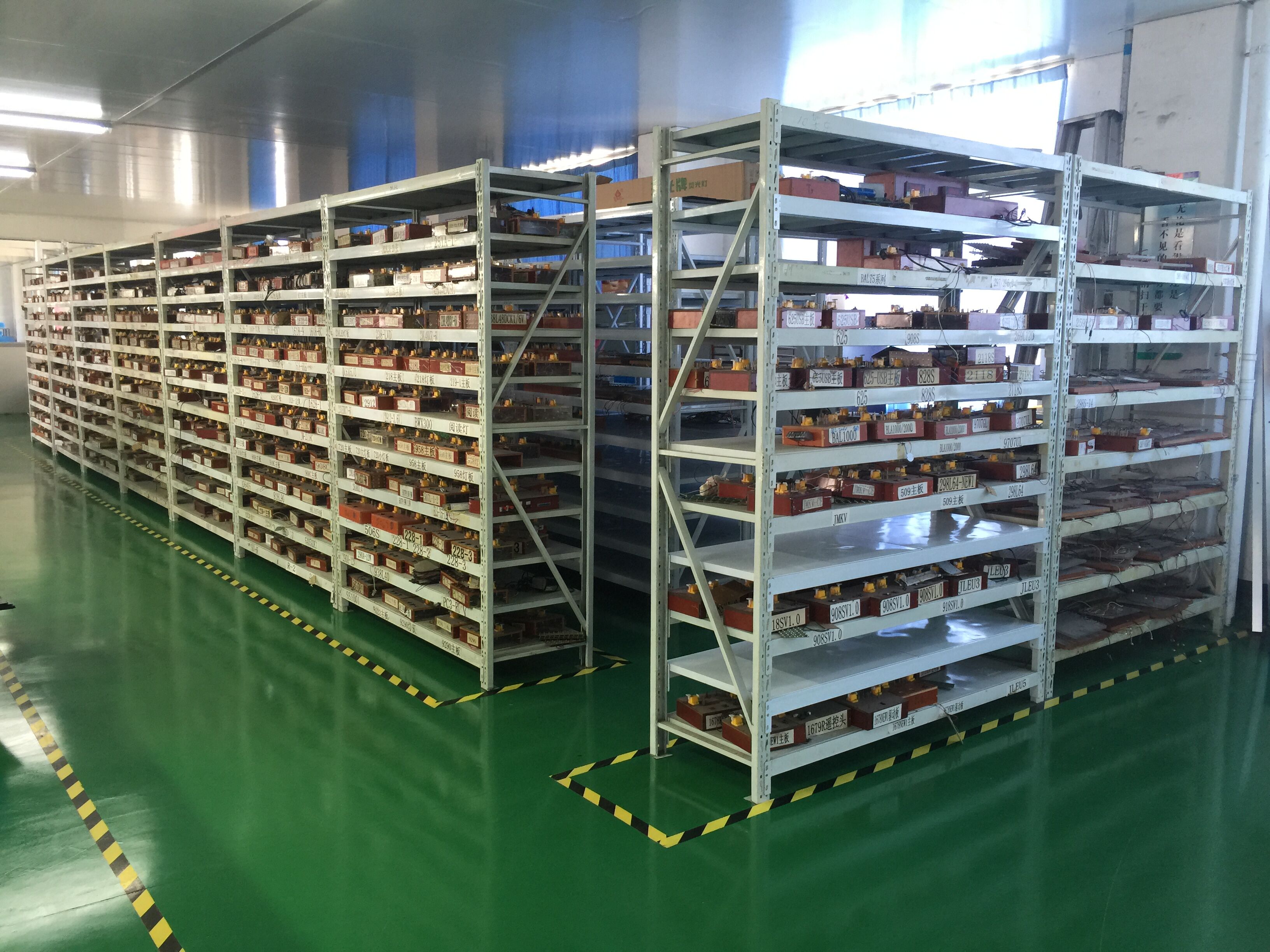
On supply, JIMING operates two fully integrated, company-owned production facilities — Ningbo, China at 70,000 m² and Haiphong, Vietnam at 38,000 m², 108,000 m² combined — with monthly production capacity of 400,000 sets and annual output of approximately 5,000,000 sets, of which 96% is exported. The Vietnam facility is built on self-owned land and can issue Vietnam origin documentation, which matters where a programme spans tariff or origin changes between order phases.
On partnership structure, a U.S.-based project cited by the company involved a long-term OEM/ODM partnership developing a product for the North American retail market over a five-year duration, with the engineering team collaborating with the customer on product development and supply maintained to UL and CSA requirements. Flexible payment terms and volume-based incentive programmes support the same long-horizon logic, because the cost of changing suppliers mid-programme is usually higher than the price difference that prompted the change.
On commercial terms, the documented baseline is a MOQ of 200 pieces, delivery terms of FOB, CIF, EXW or DDP, pre-shipment inspection with third-party inspection accepted, and TT payment. Those terms are the starting point for a programme discussion rather than a fixed offer.
Frequently Asked Questions
Which standard governs an emergency lighting installation in a parking or security area?
In North America the product standard is UL 924, which covers emergency lighting and power equipment for connection to branch circuits of 600 volts or less and includes exit signs, emergency luminaires and unit equipment. UL Solutions states that UL 924 evaluation supports requirements associated with NFPA 101, NFPA 1 and NFPA 70 Article 700, plus international fire and building codes. Local adoption and inspection practice still have to be confirmed for the individual site.
Can one emergency light supplier cover twin-head units, bulkhead lights and exit signs for the same project?
JIMING's stated product scope includes UL LED emergency and security lighting, UL exit signs, bulkhead emergency lights, emergency battery packs and emergency ballasts, so a single supplier can cover the fixture families a parking or security project normally needs. The qualification step is per model: request the model-level UL or cUL listing record and the datasheet for each item on the schedule rather than accepting a product-family claim.
What are the commercial terms for a first order?
The documented baseline is a MOQ of 200 pieces, delivery terms of FOB, CIF, EXW or DDP, pre-shipment inspection with third-party inspection accepted, and TT payment. Volume-based incentive programmes and flexible payment terms are available for programme-level partnerships. Exact terms are confirmed at quotation against the model mix and the destination.
How can a buyer validate units before committing to volume?
Validation normally rests on three documents and one physical check: the model-level listing record, the datasheet for the exact model, a photometric or runtime report where output and duration are being specified, and pre-shipment inspection of the production batch. Third-party inspection is accepted, so the buyer's own inspector or a contracted one can verify the batch before it ships. Where a project specifies a lumen or runtime figure, ask for the test conditions behind it as well as the number.
How should supply continuity be planned for a phased rollout?
Plan the programme against production capacity rather than against a single shipment. JIMING runs monthly production capacity of 400,000 sets and annual output of approximately 5,000,000 sets from two fully integrated, company-owned facilities in Ningbo, China and Haiphong, Vietnam, which allows a deck-by-deck rollout to draw on more than one production site. To discuss a project schedule, quotation or sample set, contact the team at inquiry-sgzt@ijiming.com or WhatsApp +86-135-6655-7272.
Conclusion
Emergency lighting in parking and security areas is decided by route drawing, mounting height, sign direction and test regime — four installation decisions that determine whether a correctly listed fixture actually performs when normal power fails. Fixture selection is the last step, not the first: twin-head wall-mounted units for columns and ramp walls, higher-output units for remote positions, bulkhead bodies for exposed low walls, UL exit signs at decision points, and battery packs where existing luminaires stay in service.
The habit that holds the schedule together is per-model evidence. A listing record, a datasheet, a test report and a pre-shipment inspection are what turn a product-family claim into an approved installation — and what allow the same specification to be repeated on the next phase without reopening the decision.
For projects moving from decision into execution, JIMING can review a parking, security, warehouse or hotel schedule against its published product scope and confirm which items are supported by model-level documentation. Enquiries: www.ijiming.com · inquiry-sgzt@ijiming.com · WhatsApp +86-135-6655-7272.
Have Questions or Need More Details?
Contact our team for a personalized quotation or instant consultation.
Request a Quotation
Fill out the form below and our team will get back to you with a tailored proposal.
WhatsApp Direct Chat
Prefer to chat in real-time? Message us on WhatsApp for instant assistance & quick answers.
- Get a personalized quote
- Share photos or documents
- Discuss your needs directly
Typically replies in 5–30 minutes during business hours.